
One thing I often wondered about while reading: What are we supposed to make of Jake's luck (and the role of luck in life)? He seemed to luck out several times: the two winning horse-race episodes, the potentially sweet house-sitting gig with Sadie, the generous job offer from Madge in Paris, getting the hospital gig so easily, the offer from Hugo to share some of his wealth. He never seemed truly down and out, because opportunities just seemed to fall in his lap. If he didn't avail himself of one, another soon came along. This seemed significant somehow, but I'm not really sure what Murdoch meant for us to make of it.
Also, what did you think of Finn and how he ended up back in Ireland?
Friday, July 30, 2010


Thursday, July 29, 2010
Next pick

“The Worst Hard Time” by Timothy Egan
I hope you’re in the mood for some nonfiction. Shall we say Aug. 30?
Tuesday, July 27, 2010
"Sadie would keep"
KC has pointed out some of the finer lines in "Under the Net," especially about the interstices. I thought there was some maturity to Jake's assessment, when he realized Sadie was the real object of his affection, that she would "keep." Not in a way that a woman would sit at home with her hands folded in her lap until her man caroused on home, but that she had a life and way congruent to his that meant their relationship could pick up again at some later point if it were meant to be.
When I have thought in terms of love, I admit I have not had the maturity to see that ability to let someone remain free and away from me, to percolate into whatever kind of person they were destined to become, if that makes sense. I am more inclined to feel anxious and put some stamp of ownership on that relationship. To claim dibs. Like Jake's comfort level with a life outside the settled-down and up-and-up, he also could part ways with people he loved and hope they meet again if it's meant to be. It was kind of part of that bohemian (am I using the right word? I'm tired) attitude that might have been Murdoch's or that culture at that time or whatnot, some kind of maturity we've rubbed out of our own attitudes about courtship.
When I have thought in terms of love, I admit I have not had the maturity to see that ability to let someone remain free and away from me, to percolate into whatever kind of person they were destined to become, if that makes sense. I am more inclined to feel anxious and put some stamp of ownership on that relationship. To claim dibs. Like Jake's comfort level with a life outside the settled-down and up-and-up, he also could part ways with people he loved and hope they meet again if it's meant to be. It was kind of part of that bohemian (am I using the right word? I'm tired) attitude that might have been Murdoch's or that culture at that time or whatnot, some kind of maturity we've rubbed out of our own attitudes about courtship.
The sisters
Again, I couldn't decide whether this was some target toward women, but I found it difficult to see Anna and Sadie as sisters -- they really seemed more like rivals, even without the rivalries over Jake and Hugo. (Jake being more so, I think, a rivalry they could pick up at any time but wasn't missed unless he forced himself into their lives again, as he did.) Anyway, I think there was some absence of affection, or because Jake viewed them as objects of desire, it might not have been something he could have provided as their narrator.
Did you find any more redeeming or deeper qualities in either sister, as Jake eventually did with Sadie?
Did you find any more redeeming or deeper qualities in either sister, as Jake eventually did with Sadie?
Monday, July 26, 2010
Writing style
I confess that I sometimes found Murdoch's writing style too densely detailed (mainly too concerned with physical description), and, thus, somewhat slow-moving, but I also found some real gems of phrasing and sheer observation.
Sometimes comic:
To Dave's pupils the world is a mystery; a mystery to which it should be reasonably possible to discover a key. The key would be something of the sort that could be contained in a book of some eight hundred pages. To find the key would not necessarily be a simple matter, but Dave's pupils feel sure that the dedication of between four and ten hours a week, excluding university vacations, should suffice to find it.
Hehe
Sometimes poignant:
As for her ambiguous dismissal of me, I was used to this. Most of the women I know behave in this way, and I have become accustomed to asking no questions, and even to thinking no questions. We all live in the interstices of each other's lives, and we would all get a surprise if we could see everything.
That is just brilliant to me. We all live in the interstices of each other's lives.
How strangely it excites people to see their dogs swimming!
Indeed, it does. Without fail! (I heartily enjoyed the way she portrayed Mars and Jake's fondness for him).
"Some situations can't be unravelled," said Hugo, "they just have to be dropped. The trouble with you, Jake, is that you want to understand everything sympathetically. It can't be done. One must just blunder on. Truth lies in blundering on."
That's when I saw Hugo's real genius.
And sometimes poetic:
Events stream past us like these crowds and the face of each is seen only for a minute. What is urgent is not urgent forever but only ephemerally. All work and all love, the search for wealth and fame, the search for truth, life itself, are made up of moments which pass and become nothing. Yet through this shaft of nothings we drive onward with that miraculous vitality that creates our precarious habitations in the past and the future. So we live; a spirit that broods and hovers over the continual death of time, the lost meaning, the unrecaptured moment, the unremembered face, until the final chop that ends all our moments and plunges that spirit back into the void from which it came."
Gorgeous.
Sometimes comic:
To Dave's pupils the world is a mystery; a mystery to which it should be reasonably possible to discover a key. The key would be something of the sort that could be contained in a book of some eight hundred pages. To find the key would not necessarily be a simple matter, but Dave's pupils feel sure that the dedication of between four and ten hours a week, excluding university vacations, should suffice to find it.
Hehe
Sometimes poignant:
As for her ambiguous dismissal of me, I was used to this. Most of the women I know behave in this way, and I have become accustomed to asking no questions, and even to thinking no questions. We all live in the interstices of each other's lives, and we would all get a surprise if we could see everything.
That is just brilliant to me. We all live in the interstices of each other's lives.
How strangely it excites people to see their dogs swimming!
Indeed, it does. Without fail! (I heartily enjoyed the way she portrayed Mars and Jake's fondness for him).
"Some situations can't be unravelled," said Hugo, "they just have to be dropped. The trouble with you, Jake, is that you want to understand everything sympathetically. It can't be done. One must just blunder on. Truth lies in blundering on."
That's when I saw Hugo's real genius.
And sometimes poetic:
Events stream past us like these crowds and the face of each is seen only for a minute. What is urgent is not urgent forever but only ephemerally. All work and all love, the search for wealth and fame, the search for truth, life itself, are made up of moments which pass and become nothing. Yet through this shaft of nothings we drive onward with that miraculous vitality that creates our precarious habitations in the past and the future. So we live; a spirit that broods and hovers over the continual death of time, the lost meaning, the unrecaptured moment, the unremembered face, until the final chop that ends all our moments and plunges that spirit back into the void from which it came."
Gorgeous.
Friday, July 23, 2010
Favorite parts
One of my favorite scenes in the book was when Jake and his cohorts got tipsy at the pub, then took a late-night dip in the Thames, followed by a snack of foie gras and crackers pilfered from Sadie's flat. The scene was well described. I could almost feel the foul, murky river water — and also the childlike sensation of not caring that it was foul, and the peculiar hunger you get after swimming. That's kind of a universal human experience, I think — the need to commune with the elements, water and night, and to feel like it's a kind of right, whether it's trespassing or dangerous or stupid or whatever. Jake's nighttime expedition after Anna in Paris also had that feel: the pursuit of a primal, if elusive, goal.
Although I thought some of the scenes rambled on a bit too long, I did enjoy the tours through London and Paris, all the place names and associations and the sense that the cities were themselves characters in the book. It didn't seem like a story that could be set just anywhere. It reminded me a little of George Orwell's "Down and Out in Paris and London." They should release an edition of Murdoch's book with maps of all of Jake's rambles.
Although I thought some of the scenes rambled on a bit too long, I did enjoy the tours through London and Paris, all the place names and associations and the sense that the cities were themselves characters in the book. It didn't seem like a story that could be set just anywhere. It reminded me a little of George Orwell's "Down and Out in Paris and London." They should release an edition of Murdoch's book with maps of all of Jake's rambles.
Thursday, July 22, 2010
The good life
I want to be Mrs. Tinckham when I grow up! A cheap shop full of old books, where secrets are made and kept and cats guard the perimeter.
Actually, there was a broad appeal to me of the bohemian life Jake and the other characters seemed to lead, bumping about from one situation and odd job to the next, so unlike our culture and the requisite ladder. It's also a really useful setting for a romantic comedy that one can be on one adventure to the next when there's no job to report to. I can't imagine the comfort of living that way, though. Was that just a different time and a place? Did it affect Jake's philosophy at all? Did being an orderly change that for him?
Actually, there was a broad appeal to me of the bohemian life Jake and the other characters seemed to lead, bumping about from one situation and odd job to the next, so unlike our culture and the requisite ladder. It's also a really useful setting for a romantic comedy that one can be on one adventure to the next when there's no job to report to. I can't imagine the comfort of living that way, though. Was that just a different time and a place? Did it affect Jake's philosophy at all? Did being an orderly change that for him?
Jake and the women
This is my second reading of "Under the Net" since many years ago, and the narrator, Jake, seems very different from what I remembered. I forgot he was such a connoisseur of women, their charms and their hangups. He was willing to love them for both but had to be on standby as their critic. Did you see that as well? Since it is the only book I've read by Iris Murdoch, I wondered, too, how she went about tackling a male narrative voice. Were the criticisms she piled on the women (save for the delightful Mrs. Tinckham) her personal POV or how she thought a man would perceive them?
Monday, June 21, 2010
Toothsome or tedious?
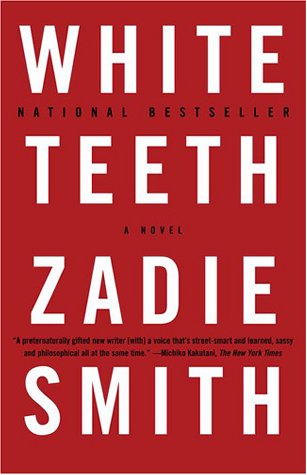
I kind of sense that the discussion of this book has petered out, but I still thought it mandatory to mention the title "White Teeth" and whether it — and all the oral references, from Clara getting her buck teeth knocked out to Irie's plan to take up dentistry (and all the toothy references in between) resonated with you at all. Clever or heavy-handed?
Tuesday, June 08, 2010
Christy's pick: "Under the Net"

"Under the Net" is an Iris Murdoch novel, which I read a long time ago. It's sort of an existential romantic comedy with one of literature's best dog characters.
We could start July 5 to give ourselves the holiday weekend to read, if we can't start it sooner.
Monday, June 07, 2010
Men!
Did you get the sense that Zadie Smith took kind of a dim view of men as a group? Did you think her female characters were much more likable on the whole? (I don't mean this to sound like a leading question!)
Comedy?
Maybe this is related to the narrative voice, but how did the overall tone of the book strike you? Did its comic elements take charge and make the book essentially a comedy? Or did the more serious themes still rise to the top for you?
I'll admit at the outset that while I heartily enjoyed many of the book's comic moments, I also found that they somewhat distracted from themes that I wanted to see developed in a more serious, poignant way — like the experience of being a foreigner in a Western country and how you might realistically be driven to violence. We saw a lot of characters who felt displaced and unsettled and we were told how sad and miserable they were, but the comic tone kind of undermined some of that for me.
I'll admit at the outset that while I heartily enjoyed many of the book's comic moments, I also found that they somewhat distracted from themes that I wanted to see developed in a more serious, poignant way — like the experience of being a foreigner in a Western country and how you might realistically be driven to violence. We saw a lot of characters who felt displaced and unsettled and we were told how sad and miserable they were, but the comic tone kind of undermined some of that for me.
Narrator
What did you think of the narrative voice? I was kind of thrown by it sometimes because I couldn't decide whether its tone was consistent. It seemed to veer between semiformal and detached to overly casual and involved. One thing in particular really stood out: its use of slang. For example, when the narrator is talking in the narrator's voice about Millat, it says he "got a lot of pu**y." Isn't that an odd way for the narrator to talk? A character, sure. But the narrator? I've seen this with other authors as well, and it always throws me because it seems like the writer is trying to inject a certain personal, casual tone, trying to lend the narrative voice a kind of hip, young personality or something without committing to an actual embodied creation. It's just a disembodied voice ... Thoughts?
Least favorite
Which character did you think was drawn the least sympathetically? (Maybe that overlaps with "whom did you like the least?" but I can also see it as a different question.)
Friday, June 04, 2010
Plot
Did you find the plot engaging? Did it seem smoothly drawn to you or a bit clunky here and there?
Characters in "White Teeth"
This novel has a fairly large and diverse cast of characters. Which character's point of view do you most identify with? Or were most sympathetic to?
Thursday, April 29, 2010
Catharsis
David's graphic essay on the process of starting "Stitches": http://www.publishersweekly.com/images/DSmall_web_650px.jpg?fullurl=/contents/images/DSmall_web_650px.jpg (click on it to enlarge)
Brothers
David's brother is present in the book, but with the exception of a couple of scenes, he's pretty invisible. Here is an interesting section of an interview with David about his brother:
Do you have any particular hopes for the book?
Something remarkable has happened because of it, already. About two years ago in February, I got a call from my editor. He was very concerned about the latest memoir publishing scandal, where the publisher was frantically shredding 75,000 copies of a book by a woman in L.A. who had claimed she'd grown up in a drug culture; her sister wrote to the newspaper and said she was lying.
Anyway, he quite rightly didn't want that to happen to his publisher, and not on his watch, so he said, "David, tell me, is there anybody still alive who might disagree with your viewpoint of these events?"
I said, "Well, I do have this brother." He said, "Have you shown it to him?" I said, "No. I told him I was doing it because he's in it, but it's not about him." And he said, "You have to show it to him." I said, "Bob, the last time I spoke with my brother, I told him to go fuck himself and that I never wanted to talk to him or hear about him again." And he said, "That's too bad, but you've got to show him the book."
So I emailed my brother and asked him if he would take a look at it. And actually I thought, because his wife had died about two months before, it might be interesting to him, to take his mind off it. I sent him a copy of the ARC.
After four days, I called him up, and I said, "What did you think of the book?" There was a long, dreadful pause on the other end of the phone. And then my brother spoke in his sepulchral, Nixonian tones, and he said, "David, your book blew me away."
I said, "Really?" He said, "Yes. It's like a snapshot of my youth," his voice getting more lively. He said, "I don't know how you did it. It's like you brought everyone back to life. They look the way they looked. Everything's exactly the way it was."
I said, "That's wonderful!" He said, "Do you mind if I show it to my therapist?" And I said, "No! What a great idea. And congratulations, by the way, on being in therapy." Then he wanted to know if he could show it to his sons, and I said, "Yes, that will probably help them understand you better."
Miraculous to say, four months later he was at my house. This is somebody whom I hadn't spoken to in fifty years. He came to our house, and he spent four days...
I'm sorry, how many years did you say?
Well, he's sixty-seven and I'm sixty-four. He might have been ten and I was six when our relationship broke off. We hated each other while we were in the house, and then he moved away, and I never really talked to him again. When we did it was always difficult.
I think what was basically going on — no, I know what was going on: Neither of us wanted anything or anybody in our lives that reminded us of our young lives.
Once this book was there, both of us could see these people again, and see them going through these situations in a way that made us both realize we had nothing to do with the anguish in that family, and there's no reason to feel guilty about it anymore.
I'll tell you, if nothing else happens with this book, it would be worth doing it just for that.
Do you have any particular hopes for the book?
Something remarkable has happened because of it, already. About two years ago in February, I got a call from my editor. He was very concerned about the latest memoir publishing scandal, where the publisher was frantically shredding 75,000 copies of a book by a woman in L.A. who had claimed she'd grown up in a drug culture; her sister wrote to the newspaper and said she was lying.
Anyway, he quite rightly didn't want that to happen to his publisher, and not on his watch, so he said, "David, tell me, is there anybody still alive who might disagree with your viewpoint of these events?"
I said, "Well, I do have this brother." He said, "Have you shown it to him?" I said, "No. I told him I was doing it because he's in it, but it's not about him." And he said, "You have to show it to him." I said, "Bob, the last time I spoke with my brother, I told him to go fuck himself and that I never wanted to talk to him or hear about him again." And he said, "That's too bad, but you've got to show him the book."
So I emailed my brother and asked him if he would take a look at it. And actually I thought, because his wife had died about two months before, it might be interesting to him, to take his mind off it. I sent him a copy of the ARC.
After four days, I called him up, and I said, "What did you think of the book?" There was a long, dreadful pause on the other end of the phone. And then my brother spoke in his sepulchral, Nixonian tones, and he said, "David, your book blew me away."
I said, "Really?" He said, "Yes. It's like a snapshot of my youth," his voice getting more lively. He said, "I don't know how you did it. It's like you brought everyone back to life. They look the way they looked. Everything's exactly the way it was."
I said, "That's wonderful!" He said, "Do you mind if I show it to my therapist?" And I said, "No! What a great idea. And congratulations, by the way, on being in therapy." Then he wanted to know if he could show it to his sons, and I said, "Yes, that will probably help them understand you better."
Miraculous to say, four months later he was at my house. This is somebody whom I hadn't spoken to in fifty years. He came to our house, and he spent four days...
I'm sorry, how many years did you say?
Well, he's sixty-seven and I'm sixty-four. He might have been ten and I was six when our relationship broke off. We hated each other while we were in the house, and then he moved away, and I never really talked to him again. When we did it was always difficult.
I think what was basically going on — no, I know what was going on: Neither of us wanted anything or anybody in our lives that reminded us of our young lives.
Once this book was there, both of us could see these people again, and see them going through these situations in a way that made us both realize we had nothing to do with the anguish in that family, and there's no reason to feel guilty about it anymore.
I'll tell you, if nothing else happens with this book, it would be worth doing it just for that.
David's dreams
The dream sequences in the book were really great. What do you make of David's recurring dream of crawling through successively smaller doors into the bombed interior of a church?
Wednesday, April 28, 2010
Monday, April 19, 2010
Mother
In his epilogue, David sounds pretty forgiving of his mother, seemingly attributing her horrible coldness to her health problems and secret life as a lesbian. Do you suppose this is a coping mechanism? Or a just a very mature show of empathy?
Sounds of silence
I was struck by all the silence in the book. It was amazing how much of the story was told with only the drawings.
Pages would go by without any dialogue between the characters. Most of the emotions are communicated through glares or little coughs or slamming cabinets. It seemed almost fitting that after growing up in a household of silence, David's voice is taken by cancer.
Pages would go by without any dialogue between the characters. Most of the emotions are communicated through glares or little coughs or slamming cabinets. It seemed almost fitting that after growing up in a household of silence, David's voice is taken by cancer.
Alice
What do you think is David's fascination with "Alice in Wonderland"? He dresses up as Alice, he fantasizes falling down the rabbit hole in his drawing, he even draws his psychologist as the White Rabbit.
Graphic memoir
What did you think of "Stitches"? Did you like the graphic format?
Kim and I have talked before about how nonfiction works better in the graphic style than fiction. Did you find that to be true with "Stitches"? And why do you think that is?
Kim and I have talked before about how nonfiction works better in the graphic style than fiction. Did you find that to be true with "Stitches"? And why do you think that is?
Thursday, April 01, 2010
The come-to-mother moment
I love the scene in the book where Henry's mom tells him she's ashamed of him for "thinking like that," that is, for only thinking of Miss Channing and Mr. Reed and their romance and never once wondering where Mrs. Reed was as they were happily strolling on the beach. At that moment, Henry realizes that his mother has seen the whole story from Mrs. Reed's perspective, and it's an absolute shock to him because he was convinced that there was only one reading of the situation. He whispers, in what struck me as the emotional high point of the book,"I'm sorry, Mother."
Then he writes:
What she did next stunned me with its uncompromising force. "You're all alike, Henry, all you men."
(Honestly, I had a flicker of respect for her just then, bitter as she was, just because most mothers seem to think their sons are the exception and easily excuse their sexist mentality instead of calling them to the mat on it! Not that I think Henry was sexist per se, but it's good for all people to be forced into an awareness of this is how the other half lives).
She stared at me for one long, ghastly moment, then turned and walked away, leaving me in a world that had begun to move again, though differently than it had before, filled with greater complications, a weave of consequences and relations that seemed larger than romance, deeper and more enduring, though still distant from my understanding, a world I'd only just briefly glimpsed, as it were, through my mother's eyes.
It's his moment of maturity, of compassion, of realizing, to paraphrase Hamlet, that there are more things in heaven and earth, Horatio, than are dreamt of in your philosophy.
And later, this notion is reinforced when he asks Sarah why Miss Channing and Mr. Reed are such cowards, why they don't just do what they want. And Sarah says, "They aren't cowards" (presumably because it's harder to not give in to personal urges than to let them hold sway).
Then Henry ruminates:
... we have never discovered why, given the brevity of life and the depth of our need and the force of our passions, we do not pursue our own individual happiness with an annihilating zeal, throwing all else to the wind. We only know that we don't, and that all our goodness, our only claim to glory, resides in this inexplicable devotion to things other than ourselves.
So he develops this sense of empathy and the belief that you must consult things other than your own passions as you move through life, which is good, but where did that get him? He gets this advice, makes these discoveries, and what is he left with? Does he abandon passion and romance, in that black-and-white mentality Erin noted? His father instills in him a sense of responsibility that is compassionate but stern, and his mother instills in him a sense more harsh than loving, and he's surrounded by adults in loveless relationships, who seem only in them because of a vow they made ages ago ... What is he supposed to think? That once you commit to someone, even if it turns out to be a bad choice, that you are duty-bound to stay your whole life? That that's what being a "good man" is? And yet it's terrible to be self-centered, too. I can see why he felt paralyzed and afraid to live! There were no role models for him of people who successfully incorporated romance and duty into their lives.
Then he writes:
What she did next stunned me with its uncompromising force. "You're all alike, Henry, all you men."
(Honestly, I had a flicker of respect for her just then, bitter as she was, just because most mothers seem to think their sons are the exception and easily excuse their sexist mentality instead of calling them to the mat on it! Not that I think Henry was sexist per se, but it's good for all people to be forced into an awareness of this is how the other half lives).
She stared at me for one long, ghastly moment, then turned and walked away, leaving me in a world that had begun to move again, though differently than it had before, filled with greater complications, a weave of consequences and relations that seemed larger than romance, deeper and more enduring, though still distant from my understanding, a world I'd only just briefly glimpsed, as it were, through my mother's eyes.
It's his moment of maturity, of compassion, of realizing, to paraphrase Hamlet, that there are more things in heaven and earth, Horatio, than are dreamt of in your philosophy.
And later, this notion is reinforced when he asks Sarah why Miss Channing and Mr. Reed are such cowards, why they don't just do what they want. And Sarah says, "They aren't cowards" (presumably because it's harder to not give in to personal urges than to let them hold sway).
Then Henry ruminates:
... we have never discovered why, given the brevity of life and the depth of our need and the force of our passions, we do not pursue our own individual happiness with an annihilating zeal, throwing all else to the wind. We only know that we don't, and that all our goodness, our only claim to glory, resides in this inexplicable devotion to things other than ourselves.
So he develops this sense of empathy and the belief that you must consult things other than your own passions as you move through life, which is good, but where did that get him? He gets this advice, makes these discoveries, and what is he left with? Does he abandon passion and romance, in that black-and-white mentality Erin noted? His father instills in him a sense of responsibility that is compassionate but stern, and his mother instills in him a sense more harsh than loving, and he's surrounded by adults in loveless relationships, who seem only in them because of a vow they made ages ago ... What is he supposed to think? That once you commit to someone, even if it turns out to be a bad choice, that you are duty-bound to stay your whole life? That that's what being a "good man" is? And yet it's terrible to be self-centered, too. I can see why he felt paralyzed and afraid to live! There were no role models for him of people who successfully incorporated romance and duty into their lives.
Monday, March 29, 2010
Responsibility
Because nearly everyone in this story dies, and Henry probably dies in spirit, could you lay responsibility in any one place here? More than one place?
Tragic means
This is the second novel by Cook I have read, and in both cases I was impressed by how the mysteries just unravel -- more tragic and chilling than all the foreshadowing properly portended -- and when you think you've heard the worst of the tale, the author delivers one more chilling revelation.
In this case it was pretty clear most of the key players wouldn't survive, so it would become how it all happened that had to emotionally hit the reader. Henry's role in the turn of events (provoking Mrs. Reed) was the first for me -- then Sarah's death as a bystander. But when I thought the worst of it was over, I was stunned to read the part about Henry going into the water and deciding to leave Mrs. Reed in the car. I mean, I think from the description of the blood flowing from her mouth that he had found a dying woman, but there must have been that moment on either side of the window where they look at each other and both know Henry will not fish her out. Why do you think he would have done that?
In this case it was pretty clear most of the key players wouldn't survive, so it would become how it all happened that had to emotionally hit the reader. Henry's role in the turn of events (provoking Mrs. Reed) was the first for me -- then Sarah's death as a bystander. But when I thought the worst of it was over, I was stunned to read the part about Henry going into the water and deciding to leave Mrs. Reed in the car. I mean, I think from the description of the blood flowing from her mouth that he had found a dying woman, but there must have been that moment on either side of the window where they look at each other and both know Henry will not fish her out. Why do you think he would have done that?
Thursday, March 25, 2010
Miss Channing and Henry
There were times in the story that I found it remarkable how noble was Henry's admiration for Miss Channing, that he recognized her beauty but could better judge her as a teacher, mentor, friend. At times I thought Miss Channing and Mr. Reed were more like Henry's substitute parents. And yet Henry was nearly ready for college and Miss Channing quite young herself, that it seemed likely they only had six or seven years of an age difference. Was it odd to you at all that he didn't see her through a more sexual perspective, or could that have been rooted as deep as his other inhibitions, something he would be too polite to imply?
Chatham
What did you think of the small town Henry described throughout the book, a place both beautiful and Gothic, but also repressive and dull? He said of Miss Channing's arrival: "She drew in a deep breath, grasped the iron rail, and made her way down the stairs and into the village where no great artist had ever lived, no great event ever happened, save for those meted out by sudden storms or the torturous movement of geologic time." What was it for Henry, anyway -- a cage? A giant albatross? A safe haven from taking any more chances at life that could hurt another person?
Small town life
I spent most of the novel wondering why Henry, who so badly wanted to leave town and see the world, would instead remain the rest of his life. His revelations toward the end explained why he imprisoned himself there without a family of his own, but I wondered why he never visited (in such a small town) all the relevant sites of the Chatham School Affair or its other living victim, Alice Craddock. What do you make of that?
Wednesday, March 24, 2010
Next pick
 "Stitches" by David Small
I thought we could revisit the graphic novel for the next pick. This is a memoir of a shockingly unhappy childhood that hopefully won't be too depressing.
Monday, March 01, 2010
British understatement
I thought this was a great description of William's personality — and also a funny way of saying how Brits and Germans differed 700 years ago in the same way as they do today:
Adso says of William: "I never understood when he was jesting. In my country, when you joke you say something and then you laugh very noisily, so everyone shares in the joke. But William laughed only when he said serious things, and remained very serious when he was presumably joking."
(cl, it occurs to me we work with a lot of Germans).
There are also some funny stereotypes of the French and Italians and Greeks.
Adso says of William: "I never understood when he was jesting. In my country, when you joke you say something and then you laugh very noisily, so everyone shares in the joke. But William laughed only when he said serious things, and remained very serious when he was presumably joking."
(cl, it occurs to me we work with a lot of Germans).
There are also some funny stereotypes of the French and Italians and Greeks.
Sunday, February 28, 2010
Wicked ecstasy
After having my fun with some of the descriptions in Adso's big love scene, I was actually pretty touched by his experience. What about you?
Saturday, February 27, 2010
The library
Christy mentioned the library should have its own post. I agree. It was probably my favorite thing about the book — that the library is a labyrinth, that it's in many ways more sacred than the abbey's church, that physically it's a just a fire hazard of mouse-chewed parchment and vellum — it's so heart-breakingly fragile — but it's the very foundation, the sum, really, of centuries and centuries of human knowledge.
And the fact that it houses the last copy of Aristotle's "Comedy." Brilliant. And the fact that old Jorge couldn't bring himself to just destroy the book. He could have just thrown it in the dung heap, but he didn't! But he had to poison the pages so anyone who read it would be destroyed. The book would live. But the reader wouldn't. I love that. And also the fact that it was Aristotle. Jorge knew that not even the church could offer up an authority to counter the wisdom of that eminent Greek philosopher. (The time setting is interesting, because the Renaissance was just around the corner, when all of that beautiful, pagan, humanistic Greek stuff would be rediscovered and flood the world of arts and letters and politics. So maybe the end of the world, at least Jorge's world, the world of the Middle Ages, really was at hand).
What were your impressions of the library?
And the fact that it houses the last copy of Aristotle's "Comedy." Brilliant. And the fact that old Jorge couldn't bring himself to just destroy the book. He could have just thrown it in the dung heap, but he didn't! But he had to poison the pages so anyone who read it would be destroyed. The book would live. But the reader wouldn't. I love that. And also the fact that it was Aristotle. Jorge knew that not even the church could offer up an authority to counter the wisdom of that eminent Greek philosopher. (The time setting is interesting, because the Renaissance was just around the corner, when all of that beautiful, pagan, humanistic Greek stuff would be rediscovered and flood the world of arts and letters and politics. So maybe the end of the world, at least Jorge's world, the world of the Middle Ages, really was at hand).
What were your impressions of the library?
The apocalypse
Isn't the staying power of religious-based fear remarkable? I couldn't help thinking that, reading about the millennial fears in NOTR, and the conviction among the cranky monks that this old whorish world was going to implode any day now from the weight of its sin. Then you turn on the TV and here are all these conservative politicians and teabaggers 700 years later saying essentially the same thing: that we have to chase the Evil One from the Oval Office and bring religion to the fore of public life before God smites us.
I mean, there's old Alinardo who's telling William the millennium has arrived and the Antichrist is going to show up any second now, and William says, um, the millennium was 300 years ago, dude. Undaunted, Alinardo employs some self-serving math and says, no, the millennium doesn't date from the birth of Christ but from 300 years later, when Constantine ceded control of Rome to the pope. Tricky, huh? Our public life is rife with this kind of junk, with spinning the facts and math when they don't work out the way you want!
Do you think Eco is tapping into some fundamental, timeless truth about people and how susceptible they are to being controlled by fear and misinformation? And it's sort of sadly humorous that at least in the Middle Ages the populace had illiteracy to blame for their ignorance and herd mentality. Jorge believed you controlled people through controlling access to knowledge. I wonder what he would make of a world where access was completely unfettered, was available with the click of the mouse, and yet a large segment of the population still chose fear and misinformation and explanations based on demonology not reason.
I mean, there's old Alinardo who's telling William the millennium has arrived and the Antichrist is going to show up any second now, and William says, um, the millennium was 300 years ago, dude. Undaunted, Alinardo employs some self-serving math and says, no, the millennium doesn't date from the birth of Christ but from 300 years later, when Constantine ceded control of Rome to the pope. Tricky, huh? Our public life is rife with this kind of junk, with spinning the facts and math when they don't work out the way you want!
Do you think Eco is tapping into some fundamental, timeless truth about people and how susceptible they are to being controlled by fear and misinformation? And it's sort of sadly humorous that at least in the Middle Ages the populace had illiteracy to blame for their ignorance and herd mentality. Jorge believed you controlled people through controlling access to knowledge. I wonder what he would make of a world where access was completely unfettered, was available with the click of the mouse, and yet a large segment of the population still chose fear and misinformation and explanations based on demonology not reason.
Saturday, February 20, 2010
The manuscript
Any thoughts on the narration — Adso recounting a story of his youth in old age — and what about the introductory part about his manuscript floating around in the 20th century? Do you think that adds anything to the story?
The mystery
Did you find the mystery absorbing? Was there anything you particularly appreciated or disliked about it?
The setting
I think one of the strengths of "The Name of the Rose" is that the tone and style vividly evoke a Medieval setting. I've tried to read other historical novels by contemporary authors, and for the most part I'm rarely convinced, perhaps because modern sensibilities creep in here and there and threaten the feel of authenticity. But, with this, I felt totally immersed in the 14th century, complete with sometimes tedious religious/philosophical asides. (There was that one part where William says "elementary" to Adso, and that made me think of the Sherlock Holmes era). What was your experience?
Thursday, February 18, 2010
"The Chatham School Affair"

I've wanted to read this book by Thomas Cook for a while now. He had a new release this year, "The Fate of Katherine Carr," which was quite good and very dark. This is a better-known title by him, and I think the premise from Publishers Weekly sounds interesting:
"Elizabeth Channing is trying to change the path of her life as, in 1926, she arrives to teach art at a small boys' school located in the Cape Cod village of Chatham. Believing that "life is best lived at the edge of folly," she immediately enthralls the novel's narrator, Henry, the headmaster's son. But Elizabeth is drawn to a fellow teacher, Leland Reed, a freethinker who is unhappily married and has begun to have serious doubts about his life. The inevitable tragedy and its aftermath is narrated by a mature, melancholy Henry looking back at the strange, bleak fates of those involved."
Does March 20 sound good?
Tuesday, January 19, 2010

Corrigan
What did you think of Corrigan and his religious convictions/charitable quests? He never moralized to the people he was "working" with. He never really encouraged them to seek a different life. He just offered them various small comforts and a place to use the bathroom and helped them with various errands (like appearing at court dates). Most importantly, I guess, he offered them the feeling that someone cared about them and didn't judge them, the comfort that they had somewhere to go, someone to turn to. His religious charity seemed to consist in asking himself, "What might this person really need right now to feel connected to humanity?" And the answer would be not a lecture, but a hot cup of coffee, or, in the elderly, racist curmudgeon's case, a tryst with the hookers.
And then there's his relationship with the immigrant mother — a chance for love and connection for himself. Why was it hard for him to give into that? Did he think it would detract from his "mission"? That it would make him selfishly concerned with his own happiness?
And then there's his relationship with the immigrant mother — a chance for love and connection for himself. Why was it hard for him to give into that? Did he think it would detract from his "mission"? That it would make him selfishly concerned with his own happiness?
Tuesday, January 12, 2010
Man on wire
What did you think of the narrative hook of the tightrope walker? What did it add to the stories? Was it metaphorical?
Narrators
Did you have a particular favorite narrator? Were there any you thought didn't particularly work?
Why do you think most chapters were in first person but some weren't?
Why do you think most chapters were in first person but some weren't?
"Let the Great World Spin"
Thoughts? First impressions?
What did you think of the writing? What did you think of the narrative style of switching perspectives every chapter?
What did you think of the writing? What did you think of the narrative style of switching perspectives every chapter?
Saturday, December 26, 2009
Steps Through The Mist
Hi, everyone. I'm sorry to start posting so late here. Hope you enjoyed your holidays, if you've had them yet.
First impressions on "Steps": What did you think? Did it meet, exceed, fall below your expectations? Did it read like a fantasy? (I think I harbor back to days when fantasies included dragons or hobbits or whatnot. This was more like quality literature to me.)
I found myself eager to jump into each "dream" sequence and was surprised by how quickly the stories unfolded.
How did the dream premise work for you as a paranormal element?
First impressions on "Steps": What did you think? Did it meet, exceed, fall below your expectations? Did it read like a fantasy? (I think I harbor back to days when fantasies included dragons or hobbits or whatnot. This was more like quality literature to me.)
I found myself eager to jump into each "dream" sequence and was surprised by how quickly the stories unfolded.
How did the dream premise work for you as a paranormal element?
Friday, December 04, 2009
Next pick
 "Let the Great World Spin" by Colum McCann
Here's an excerpt from the Amazon review:
Colum McCann has worked some exquisite magic with Let the Great World Spin, conjuring a novel of electromagnetic force that defies gravity. It's August of 1974, a summer "hot and serious and full of death and betrayal," and Watergate and the Vietnam War make the world feel precarious. A stunned hush pauses the cacophonous universe of New York City as a man on a cable walks (repeatedly) between World Trade Center towers. This extraordinary, real-life feat by French funambulist Philippe Petit becomes the touchstone for stories that briefly submerge you in ten varied and intense lives--a street priest, heroin-addicted hookers, mothers mourning sons lost in war, young artists, a Park Avenue judge. All their lives are ordinary and unforgettable, overlapping at the edges, occasionally converging. And when they coalesce in the final pages, the moment hums with such grace that its memory might tighten your throat weeks later.
Wednesday, November 18, 2009
'Soldiers are dreamers'
And not to bore with you passages from other books, but I also found this passage at the beginning of O'Brien's war memoir very moving.
Now, war ended, all I am left with are simple, unprofound scraps of truth. Men die. Fear hurts and humiliates. It is hard to be brave. It is hard to know what bravery is. Dead human beings are heavy and awkward to carry, things smell different in Vietnam, soldiers are dreamers, drill sergeants are boors, some men thought the war was proper and others didn't and most didn't care. Is that the stuff for a morality lesson, even for a theme?
Do dreams offer lessons? Do nightmares have themes, do we awaken and analyze them and live our lives and advise others as a result? Can the foot soldier teach anything important about war, merely for having been there? I think not. He can tell war stories.
The first paragraph as a summary of the war experience is just amazing ("most didn't care"). But the question in the second, "Do dreams offer lessons?", seems to foreshadow the format of "Cacciato," how it's one big daydream in a way. So, do you have any thoughts on how Paul Berlin's dream offers a lesson?
Now, war ended, all I am left with are simple, unprofound scraps of truth. Men die. Fear hurts and humiliates. It is hard to be brave. It is hard to know what bravery is. Dead human beings are heavy and awkward to carry, things smell different in Vietnam, soldiers are dreamers, drill sergeants are boors, some men thought the war was proper and others didn't and most didn't care. Is that the stuff for a morality lesson, even for a theme?
Do dreams offer lessons? Do nightmares have themes, do we awaken and analyze them and live our lives and advise others as a result? Can the foot soldier teach anything important about war, merely for having been there? I think not. He can tell war stories.
The first paragraph as a summary of the war experience is just amazing ("most didn't care"). But the question in the second, "Do dreams offer lessons?", seems to foreshadow the format of "Cacciato," how it's one big daydream in a way. So, do you have any thoughts on how Paul Berlin's dream offers a lesson?
Courage
I really loved this passage from "If I die in a Combat Zone." It's about how true courage can't exist without other qualities. I think it informs some of the scenes in "Cacciato," scenes where apparent cowardice might more properly be interpreted as courage.
For courage, according to Plato, is one of the four parts of virtue. It is there with temperance, justice and wisdom, and all parts are necessary to make a sublime human being. In fact, Plato says, men without courage are men without temperance, justice or wisdom, just as without wisdom men are not truly courageous. Men must know what they do is courageous, they must know it is right, and that kind of knowledge is wisdom and nothing else. Which is why I know few brave men. Either they are stupid and do not know what is right. Or they know what is right and cannot bring themselves to do it. Or they know what is right and do it, but do not feel and understand the fear that must be overcome.
For courage, according to Plato, is one of the four parts of virtue. It is there with temperance, justice and wisdom, and all parts are necessary to make a sublime human being. In fact, Plato says, men without courage are men without temperance, justice or wisdom, just as without wisdom men are not truly courageous. Men must know what they do is courageous, they must know it is right, and that kind of knowledge is wisdom and nothing else. Which is why I know few brave men. Either they are stupid and do not know what is right. Or they know what is right and cannot bring themselves to do it. Or they know what is right and do it, but do not feel and understand the fear that must be overcome.
Monday, November 16, 2009
The girl
Any thoughts on Sarkin Aung Wan and her determination to play house in Paris with Paul Berlin?
Best and worst
What was your favorite aspect of the book? And least favorite?
My favorite: I loved the notion of traveling overland from Vietnam to Paris and the descriptions of the places they saw: Mandalay, India, Tehran, Greece, etc. And I admired the depiction of the war-without-a-front as a psychological battle that occurred in each man's head. I also found the events leading up to Lt. Martin's murder eerie and awe-inspiring.
My least favorite: Maybe this is a comment on my own comprehension rather than the author's skill, but I found many of the characters hard to picture and hard to distinguish one from the other. Even Paul Berlin. I didn't feel I had a great grasp on who he actually was. (I did like the portraits of the two lieutenants: the strict, by the book Lt. Martin and the more realistic, more humane Lt. Corson, who fell in love in India and wanted to stay).
My favorite: I loved the notion of traveling overland from Vietnam to Paris and the descriptions of the places they saw: Mandalay, India, Tehran, Greece, etc. And I admired the depiction of the war-without-a-front as a psychological battle that occurred in each man's head. I also found the events leading up to Lt. Martin's murder eerie and awe-inspiring.
My least favorite: Maybe this is a comment on my own comprehension rather than the author's skill, but I found many of the characters hard to picture and hard to distinguish one from the other. Even Paul Berlin. I didn't feel I had a great grasp on who he actually was. (I did like the portraits of the two lieutenants: the strict, by the book Lt. Martin and the more realistic, more humane Lt. Corson, who fell in love in India and wanted to stay).
Vietnam
One of the things I really like about Tim O'Brien's books about Vietnam is how they give you a visceral sense of being there — feeling what the physical landscape is like, the terrible heat, the dampness, the insects, the rice paddies, the mountains and villages and land-mined trails; and the psychological landscape, the constant fear and exhaustion and homesickness.
Do you think he did a good job with this? (I actually have a stronger sense of these things in his other books, but I'm curious what you think having just read "Cacciato").
Do you think he did a good job with this? (I actually have a stronger sense of these things in his other books, but I'm curious what you think having just read "Cacciato").
What did you think?
I found this book challenging at first because the characters seemed kind of a blur to me and trying to sort out what was real and what was imagined was rather tiring. But I enjoyed the book more as it went on, maybe because at some point I was able to conclude that it's ALL fiction or, conversely, that it's ALL truth, and I was more comfortable just being carried along by the narrative.
Wednesday, September 23, 2009

Friday, September 11, 2009
WTF?
What was the deal with Madam and Miss Emily, shacking up together in that weird house with some big Nigerian servant dude and who knows who else? I feel like there's some code to understanding and appreciating this book that has completely eluded me.
If I were some British writer wanting to explore how the government has taken charge of an individual's body to make it conform to its plan, I'd write about this amazing man.
If I were some British writer wanting to explore how the government has taken charge of an individual's body to make it conform to its plan, I'd write about this amazing man.
Tuesday, September 08, 2009
Emotion
The narration of "Never Let Me Go" seemed almost void of emotion, even when describing the deaths of close friends and her own impending death. Did that lessen the emotional weight for you as a reader?
Science fiction
I've seen this book compared to "1984" and "Brave New World." Do you think the book is successful in its portrayal of a dystopia that clones individuals to be organ factories? Does it seem horrifying, or does it seem too unlikely to be taken seriously?
"Never Let Me Go"
Did you like it? Any general impressions? Do you think it deserves to be on TIME's list of top 100 novels?
Tuesday, July 28, 2009

Thursday, July 09, 2009
Related reading
Just read an interesting post on Salon ("History is bunk after all") about Margaret MacMillan's "Dangerous Games: The Uses and Abuses of History," which is quite relevant to our discussions on Horwitz. An excerpt:
"Dangerous Games" calls for "professional historians" (by which I think MacMillan means "academics") to "contest the one-sided, even false, histories that are out there in the public domain. If we do not, we allow our leaders and opinion makers to use history to bolster false claims and justify bad and foolish policies." In recent years, she complains, academic historians have become either unduly "self-referential" or preoccupied with "fun" but ultimately insignificant fluff like culture studies.
The whole post is here.
"Dangerous Games" calls for "professional historians" (by which I think MacMillan means "academics") to "contest the one-sided, even false, histories that are out there in the public domain. If we do not, we allow our leaders and opinion makers to use history to bolster false claims and justify bad and foolish policies." In recent years, she complains, academic historians have become either unduly "self-referential" or preoccupied with "fun" but ultimately insignificant fluff like culture studies.
The whole post is here.
Friday, June 26, 2009
Your past
One of the things that really fascinates me is how people differ so much in their relationship to their past. Some people are completely uninterested in their ancestors and whatnot. But others — and not just disenfranchised minorities — are really drawn to what they consider their ethnic/racial/cultural/religious roots. And it ranges from simple historical curiosity to stringent identity politics to obsessive, off-the-wall kookiness. Horwitz encounters all types in his book, which underlines his point that history "lives" in both expected and unexpected ways.
Where do you think you fall on that spectrum of interest in your deep past?
Also, people's pride in their ancestry takes different forms. For some, it's about dignity and careful preservation and respect. But others seem to prefer showing their pride through festivals and marketing to tourists, etc. It's almost like a kind of cynical commercialism is always pawing at the door of authenticity.
Where do you think you fall on that spectrum of interest in your deep past?
Also, people's pride in their ancestry takes different forms. For some, it's about dignity and careful preservation and respect. But others seem to prefer showing their pride through festivals and marketing to tourists, etc. It's almost like a kind of cynical commercialism is always pawing at the door of authenticity.
Why are we so stubbornly stupid?
Did you think there was sufficient explanation in the book for WHY people are so tenaciously attached to false history? Or did Horwitz just treat it as a given that people cling to their myths — religious, historic and otherwise — even when they are demonstrated absurdities? Like it's just human nature to hold on to the first thing you were told?
I sometimes wished he would explore this phenomenon more. He touches on it when he makes comments to the effect that history is written by the winners, which in this case was white, Anglo Protestants, but I sometimes wished he would talk to a psychologist (vs. a local historian, say) to delve into this weird mental hurdle people have with perpetuating bad history.
I sometimes wished he would explore this phenomenon more. He touches on it when he makes comments to the effect that history is written by the winners, which in this case was white, Anglo Protestants, but I sometimes wished he would talk to a psychologist (vs. a local historian, say) to delve into this weird mental hurdle people have with perpetuating bad history.
Good and bad history
Were there incidents of "fake history" that especially stood out as something you remember learning as a kid? And did any aspects of the real history surprise you?
Horwitz's method
Did you enjoy the book?
What did you think of Horwitz's method of interspersing historic accounts with present-day treks to the sites?
What did you think of Horwitz's method of interspersing historic accounts with present-day treks to the sites?
Monday, June 01, 2009
Tales of the Black Freighter
What do you think is the purpose of the pirate comic that is interspersed throughout the story? How does it relate to the main narrative?
And in a related question, did you like all the extra materials between each chapter? Or did it get in the way?
And in a related question, did you like all the extra materials between each chapter? Or did it get in the way?
God
I read a piece of a review of "Watchmen" that argued that the theme of the book was what it means to be God.
There's a quote in the book from some military guy or something after Jon's accident that says, "There is a God, and he's American." And Jon does have some godlike powers, including the ability to see and travel through time and space, survive on Mars, give Laurie some kind of force field, get disintegrated and still survive, etc.
And then we have Veidt, who is certainly playing God in his attempt to manipulate world politics by sacrificing millions of lives.
Thoughts?
There's a quote in the book from some military guy or something after Jon's accident that says, "There is a God, and he's American." And Jon does have some godlike powers, including the ability to see and travel through time and space, survive on Mars, give Laurie some kind of force field, get disintegrated and still survive, etc.
And then we have Veidt, who is certainly playing God in his attempt to manipulate world politics by sacrificing millions of lives.
Thoughts?
Thursday, May 28, 2009
Rorschach
What did you think of Rorschach? I found him really likable, despite his being a total sociopath. Why do you think that is?
Dr. Manhattan
What was your reaction to Jon? Why do you think Laurie lived with the guy for 20 years?
Cold War
Do you think all the 1980s stuff about the Soviets and nuclear war makes the book too dated?
The Comedian
My God, what an asshole.
What was up with his relationship with Silk Spectre? He brutally attacks her, but then she "can't stay mad" for some reason and has sex with him. But 16 years later, she's mad again and yells at him for talking to her daughter. And then at the end, we see her tearfully kissing his photo. WTF? Do you buy this love-hate relationship?
What was up with his relationship with Silk Spectre? He brutally attacks her, but then she "can't stay mad" for some reason and has sex with him. But 16 years later, she's mad again and yells at him for talking to her daughter. And then at the end, we see her tearfully kissing his photo. WTF? Do you buy this love-hate relationship?
The ending
What did you think? Did you find it "chilling"?
I did enjoy the very last part, the part where the news clerk stumbles upon Rorschach's diary, and we can assume that Veidt's plot will eventually be revealed.
But Veidt's plot itself -- creating a giant octopus-looking monster with the cloned brain of a psychic and using it to distract world leaders from fighting each other -- struck me as a bit ... stupid. Not to mention contrived and overly complicated.
The whole thing depends on the existence of psychics? And "sensitives"? To use an old joke, didn't the psychics see this coming?
But then again, it is a comic. Am I being too picky?
I did enjoy the very last part, the part where the news clerk stumbles upon Rorschach's diary, and we can assume that Veidt's plot will eventually be revealed.
But Veidt's plot itself -- creating a giant octopus-looking monster with the cloned brain of a psychic and using it to distract world leaders from fighting each other -- struck me as a bit ... stupid. Not to mention contrived and overly complicated.
The whole thing depends on the existence of psychics? And "sensitives"? To use an old joke, didn't the psychics see this coming?
But then again, it is a comic. Am I being too picky?
Kim's pick: A Voyage Long and Strange

I thought this book looked fun. I've read and enjoyed a few other books by Tony Horwitz, the husband of Geraldine Brooks (the Pulitzer power couple) — including "Blue Latitudes," where he retraces the voyages of Captain Cook, and "Baghdad Without a Map," about his travels through the Mideast. He's a great historian, journalist and adventure traveler.
The hardback has a different subtitle ("Rediscovering the New World") than the paperback ("On the Trail of Vikings, Conquistadors, Lost Colonists, and Other Adventurers in Early America," which I suppose is sexier in its specificity), but it appears to be the same book — although there's a fun 15th century woodcut in the intro to the hardcover that I don't see in the "Look Inside" feature on Amazon with the paperback. I would hate to miss an illustration!
Thursday, May 07, 2009

Thursday, April 30, 2009
Prejudice
I found this scene puzzling — the one where the young people are in the bar and the bartender won't serve the Jew. Any theories on why McDermott included this?
Sex on the beach
What was your take on why Billy and Eva didn't have sex while Dennis and his Irish girl were doing it right and left? Was this more of Billy idealizing Eva, his foolish propensity to let the lovely Present give way to the dreamed-of Future?
(I think if Sebastian Barry had written this book, his hopeless-romantic Irishman at least would have gotten some insane glory out of the deal before the cold reality set in!)
(I think if Sebastian Barry had written this book, his hopeless-romantic Irishman at least would have gotten some insane glory out of the deal before the cold reality set in!)
Tuesday, April 28, 2009
Mama knows best?
(I'm home with my book, and I'm giddy looking through it).
Here's something I have to ask, especially based on Erin's just-get-over-it remarks about romantics (hehe). Look at this description of Dennis' mother. What do you think McDermott intended by including a character like this (someone who is regarded as a "sage" in the family and who is seemingly at the other end of the spectrum from Billy)?
She was a Geiger counter for insincerity, phoniness, half-truths. She could dismantle a pose with a glance and deflate the most romantic notion with a single word. She had no patience for poetry, Broadway musicals, presidential politics, or the pomp of her religion — although my father, his father's son, loved these things in direct proportion to her disdain — and she sought truth so single-mindedly that under her steady gaze exaggeration, self-delusion, bravado simply dried up and blew away, as did hope, nonsense, and any ungrounded giddiness.
Her philosophy of life seemed to be to get to the bottom of things, the plain, unadorned, mostly concrete and and colorless bottom of things, and from there to seek to swat away any passing fancy that might cloud the hard-won clarity of her vision.
And is Dennis intended as a sort of happy medium between his mother's no-nonsense view and Billy's romanticized one?
Here's something I have to ask, especially based on Erin's just-get-over-it remarks about romantics (hehe). Look at this description of Dennis' mother. What do you think McDermott intended by including a character like this (someone who is regarded as a "sage" in the family and who is seemingly at the other end of the spectrum from Billy)?
She was a Geiger counter for insincerity, phoniness, half-truths. She could dismantle a pose with a glance and deflate the most romantic notion with a single word. She had no patience for poetry, Broadway musicals, presidential politics, or the pomp of her religion — although my father, his father's son, loved these things in direct proportion to her disdain — and she sought truth so single-mindedly that under her steady gaze exaggeration, self-delusion, bravado simply dried up and blew away, as did hope, nonsense, and any ungrounded giddiness.
Her philosophy of life seemed to be to get to the bottom of things, the plain, unadorned, mostly concrete and and colorless bottom of things, and from there to seek to swat away any passing fancy that might cloud the hard-won clarity of her vision.
And is Dennis intended as a sort of happy medium between his mother's no-nonsense view and Billy's romanticized one?
Monday, April 27, 2009
Chicken or egg?
I felt that Billy's alcoholism was intimately related to his ordeal with Eva, but then there's also the feeling that alcoholism was common in that community/family, that it was almost fate. Did you think Eva merely exacerbated a strong predisposition or did the sadness really drive him to drink?
Favorite scene
Did you have a favorite scene?
(I really liked the scene near the end where the narrator and her dad took the relative — was it Dan Lynch? I don't have my book with me — back to his apartment and stayed to have a drink with him and talk about Billy. I thought it was kind of a nice bookend to the funeral lunch at the beginning.)
(I really liked the scene near the end where the narrator and her dad took the relative — was it Dan Lynch? I don't have my book with me — back to his apartment and stayed to have a drink with him and talk about Billy. I thought it was kind of a nice bookend to the funeral lunch at the beginning.)
Eva
Did you have any anger toward Eva at any point, or were you able to easily accept that her actions were just the folly of youth?
The lie
How did you feel about Dennis' lie to Billy? If he had just told him the truth from the beginning, do you think there would have been a different outcome for Billy?
Thursday, April 23, 2009
Tuesday, April 21, 2009
The narrator
I thought the choice of narrator was really interesting in this book — someone who was at some distance from the heart of the story but near enough to have it told to her from someone closely involved and then to retell it. What did you think of this?
Here's what McDermott herself said about her narrative choice in an interview she did after the novel won the National Book Award in 1998.
INTERVIEWER: And the book is almost an elegy, the voice that one of the judges referred to that tells the story, which is a young woman, actually, has a kind of delicate elegiac tone. How did you decide to do that, to make her the storyteller?
ALICE McDERMOTT: Do you know I resisted that voice, that first person narrative, but it seemed to me if you're telling a story about faith, you're also telling a story about telling stories, the things that we believe in — our stories that we hear and are told. And so it seemed to me that the entire novel needed to be told to someone, and that was where - the inevitability of that first person voice telling a story that's not necessarily her own, but putting together, as women do, the various stories in her family and making something of it.
Here's the whole interview.
Here's what McDermott herself said about her narrative choice in an interview she did after the novel won the National Book Award in 1998.
INTERVIEWER: And the book is almost an elegy, the voice that one of the judges referred to that tells the story, which is a young woman, actually, has a kind of delicate elegiac tone. How did you decide to do that, to make her the storyteller?
ALICE McDERMOTT: Do you know I resisted that voice, that first person narrative, but it seemed to me if you're telling a story about faith, you're also telling a story about telling stories, the things that we believe in — our stories that we hear and are told. And so it seemed to me that the entire novel needed to be told to someone, and that was where - the inevitability of that first person voice telling a story that's not necessarily her own, but putting together, as women do, the various stories in her family and making something of it.
Here's the whole interview.
Tuesday, April 07, 2009
Bump
Sorry it's been a while -- hopefully you'll still remember this story!
What did you think of this story? Is this the ending you might have envisioned for Ms. Hempel?
And what's the deal with Jonathan Hamish again? There seemed to be an almost romantic interest going on, didn't there?
What did you think of this story? Is this the ending you might have envisioned for Ms. Hempel?
And what's the deal with Jonathan Hamish again? There seemed to be an almost romantic interest going on, didn't there?
Sunday, March 29, 2009
Satellite
This story was slightly sad to me, maybe just because I think mother-daughter relations so often seem so fraught with disappointment and misunderstandings. It's interesting to see how the dynamics have changed in Ms. Hempel's childhood home, since the strong presence of her father is gone and her young sister and mother are by themselves. Ms. Hempel seems sort of detached from the whole situation, like a satellite, I guess: still connected to the place but kept at a distance. Any thoughts on this story?
Wednesday, March 25, 2009
Tattered romance
And how does Ms. Hempel's emerging understanding of all the affairs at her school and her own breakup with Amit affect her point of view regarding Ms. Duffy's experience?
And this perplexing ending: "... still she returned to the bathroom at Mooney’s, to its perfect mystery, to the moment when Mr. Polidori had wrapped his arms around her like a bear. That moment in which someone had made a decision. She wanted to remember how it felt."
(I really loved the description of how Ms. Duffy danced at the bar, how they were all there in the harsh light of afternoon but hidden in the freeing darkness of the bar ... I like how Ms. Hempel always seems rather amazed that anyone can get over anything that was once important).
And this perplexing ending: "... still she returned to the bathroom at Mooney’s, to its perfect mystery, to the moment when Mr. Polidori had wrapped his arms around her like a bear. That moment in which someone had made a decision. She wanted to remember how it felt."
(I really loved the description of how Ms. Duffy danced at the bar, how they were all there in the harsh light of afternoon but hidden in the freeing darkness of the bar ... I like how Ms. Hempel always seems rather amazed that anyone can get over anything that was once important).
Disillusioned
What do you make of Ms. Hempel's reaction when she finds out that "the father of Ms. Duffy’s baby was an American, whom she’d met in the courtyard of an ugly condominium" rather than an exotic Mideasterner, and that Ms. Duffy's sudden quietness was explained not by a romantic adventure abroad but by being in upstate New York with food sickness?
Yurt
This story offers us more about Ms. Hempel's fellow teachers and their social interactions than we've seen before.
I'm sort of coming up empty on this story. Does anybody have any thoughts on it?
I'm sort of coming up empty on this story. Does anybody have any thoughts on it?
Friday, March 20, 2009
Crossing
This story explores origins, and Ms. Hempel's Chinese-American heritage is revealed. Ms. Hempel seems somewhat conflicted about that heritage. She seems to want to downplay that part of her identity. But she also feels guilty about passing up the opportunity to interview her grandmother about her immigration and failing to learn Mandarin as she had planned.
What do you think captivated her so much about the colonist re-enactors?
What do you think captivated her so much about the colonist re-enactors?
Thursday, March 12, 2009
Creep
What did you make of this story? Who was this guy calling young Ms. Hempel's house every night? What was going on with her parents?
It was kind of interesting to see Ms. Hempel at the age of her current students and think about how her experiences at that age probably affect how she relates to them now.
It was kind of interesting to see Ms. Hempel at the age of her current students and think about how her experiences at that age probably affect how she relates to them now.
Tuesday, March 10, 2009
Sandman
This was an interesting one. There seemed to be a lot going on here, from the assembly warning the kids about stranger danger to Ms. Hempel's two girlfriends to her fiance and their sexual incompatibility to the field trip and Jonathan Hamish's sand burial. What do you think was the connection between these things?
Kim's pick

I recently read a novella by Alice McDermott called "That Night" and thought it was one of the best things I had ever read about adolescence and summertime in America. The sense of nostalgia was completely sugar-free. I have high hopes for this.
Monday, March 09, 2009
Accomplice
I thought this story was really interesting in its themes about how we view ourselves, how we hope others will view us, how difficult it is to sum up a person in words.
What did you think of Ms. Hempel's idea of having the students write their own anecdotals? I thought it was sort of touching how disappointed the parents were to find out the reports weren't authentic. How eager they had been to believe that someone had finally seen in their children the same potential for greatness that they did.
What did you think of Ms. Hempel's idea of having the students write their own anecdotals? I thought it was sort of touching how disappointed the parents were to find out the reports weren't authentic. How eager they had been to believe that someone had finally seen in their children the same potential for greatness that they did.
Friday, March 06, 2009
Ms. Hempel
What do you think of Ms. Hempel? She thinks she's not a very good teacher -- do you agree? Do you think she likes teaching?
Talent
What were your impressions after the first story?
I really enjoyed it. The picture of middle school was so vivid, with the various kids and their awkward, emotional existence. I especially liked the miniature portraits of the different kids -- Harriet and her magic show, Edward and his boa constrictor, and especially Jonathan Hamish, whom I found really touching. I could understand why Ms. Hempel felt tender toward him.
I really enjoyed it. The picture of middle school was so vivid, with the various kids and their awkward, emotional existence. I especially liked the miniature portraits of the different kids -- Harriet and her magic show, Edward and his boa constrictor, and especially Jonathan Hamish, whom I found really touching. I could understand why Ms. Hempel felt tender toward him.
Subscribe to:
Posts (Atom)

