
As you all know, I have bipolar disorder and I've been through several clinical depressions in my life. Depression leaves an emptiness inside of me that I often try to fill with food. I always gain weight when suffering from a long depressive episode.
Does sadness, depression, or death have that effect on any of you? I thought the anecdote about the man who ate all the steaks after his love died was quite strange. I suppose it is understandable, but it still is strange.
Monday, May 07, 2007


R is for Romantic
Romance and sex are recurring themes in this book. What do you think of her using 8-year-old Red as an example of romance? She clearly (from all of her hints in other chapters) had other incidents she could have chosen. Why did she choose Red?
Q is for quantity
Do you suffer from the ill that she talks about in this chapter: Increasing certain ingredients in your cooking beyond all good taste? I'm afraid I've done that. When I was a boy, I always thought that more of whatever made something good would make it better. I found out that this was not true when I put way too much garlic powder on buttered toast!
But I still put too much of stuff on meals I make for myself. Too much Miracle Whip or peanut butter on sandwiches, too much sugar in or on anything sweet, too much ketchup on my fries, too much sauce on anything saucy. I think I've learned from my mistakes in putting too much flavoring into dishes, but you never know when my boyish stupidity might return and we find out just what it tastes like to have too much basil in a red sauce.
But I still put too much of stuff on meals I make for myself. Too much Miracle Whip or peanut butter on sandwiches, too much sugar in or on anything sweet, too much ketchup on my fries, too much sauce on anything saucy. I think I've learned from my mistakes in putting too much flavoring into dishes, but you never know when my boyish stupidity might return and we find out just what it tastes like to have too much basil in a red sauce.
P is for peas
Have you ever had peas that fulfill her three requirements: Very green, freshly gathered, shelled at the last moment? I wonder how much better they can be than the best peas I've had. I quite like good peas, but without having had fresh ones, I wonder how much better they might be!
O is for Ostentation
Have you ever served certain food, or eaten at a certain restaurant, to impress someone?
N is for Nautical
As I mentioned in a comment on cl's blog, I don't enjoy boats or ships. I have an irrational fear of being on the water, so I would probably be unable to enjoy meals on a cruise. Those of you who suffer from motion sickness, would you be able to enjoy meals on board? Are cruiseships large and stable enough to prevent seasickness?
And for further discussion, see cl's blog.
And for further discussion, see cl's blog.
M is for Monastic
This is related to the first chapter, as it is on dining alone, but it is now restricted to men. What are the differences between Monk's stew followed by licking the plate clean and the author's dinner of Ry Crisp, tomato soup, and California sherry surrounded by pocket detective stories?
Friday, May 04, 2007
L is for Literature
I remember the Boeuf en Daube from Virginia Woolf's "To the Lighthouse."
"It was rich; it was tender. It was perfectly cooked. It was a triumph." In fact, when I took an interest in cooking in fall 2005, the first Bon Appetit I purchased included this recipe, except I subbed beef instead of venison.
It was not a triumph, but still, I like authors who trouble to tell you what their characters are eating. It's just as important to mood as where they're at and what song is on the radio.
Agatha Christie's Hercule Poirot is a gourmand, and as I tried to remember great meals he has eaten, I pulled out "Funerals are Fatal." He is host to the elderly Mr. Entwhistle, a retired attorney who has met with the survivors of a rich client and suspects that one of them did the client in.
To stimulate Entwhistle's storytelling and soothe his palate, Poirot serves:
Pate de Foie Gras on hot toast by the fire
Sole Veronique
Escalope de Veau Milanaise
Poire Flambee with ice cream
Served with Pouilly Foisse, followed by "Corton and a good port."
(Poirot, "who did not care for port, sipped Creme de Cacao.")
Any sources of literature ever whet your appetite?
"It was rich; it was tender. It was perfectly cooked. It was a triumph." In fact, when I took an interest in cooking in fall 2005, the first Bon Appetit I purchased included this recipe, except I subbed beef instead of venison.
It was not a triumph, but still, I like authors who trouble to tell you what their characters are eating. It's just as important to mood as where they're at and what song is on the radio.
Agatha Christie's Hercule Poirot is a gourmand, and as I tried to remember great meals he has eaten, I pulled out "Funerals are Fatal." He is host to the elderly Mr. Entwhistle, a retired attorney who has met with the survivors of a rich client and suspects that one of them did the client in.
To stimulate Entwhistle's storytelling and soothe his palate, Poirot serves:
Pate de Foie Gras on hot toast by the fire
Sole Veronique
Escalope de Veau Milanaise
Poire Flambee with ice cream
Served with Pouilly Foisse, followed by "Corton and a good port."
(Poirot, "who did not care for port, sipped Creme de Cacao.")
Any sources of literature ever whet your appetite?
K is for Christy hates borscht
And I have little to say about the Kosher chapter. I did like this:
"It is an astonishing and moving thing that after so many flights of terror, after so many vigils in strange lands, many Jews still feast as Moses told them to do."
"It is an astonishing and moving thing that after so many flights of terror, after so many vigils in strange lands, many Jews still feast as Moses told them to do."
Thursday, May 03, 2007
"J is for Juvenile Dining"
It must be frustrating for an author of Fischer's taste to succumb to her child's mealtime preferences the way all parents eventually must do. Toddlers are tyrants at the table. You cannot make them eat anything, and they can outwait their masters for days, with no apparent consequences, until a jittery parent succumbs and gives them their cut-up Jenos pizza or a generous serving of Shrimp Poppers in lieu of taking them to the doctor for intravenous caloric support.
And to accept that TV commercials and peers' tastes will sway the child to a preference for sugary cereals, pizza and soda pop. I guess it's a precursor to when those forces will direct a child how to dress and act, and what she will read and watch and listen to. And a parent has to stand by and accept it.
My nephew Alex, 3, was eating Shrimp Poppers at Thanksgiving while the rest of us laid into various homemade hors d' oeuvres, and my grandparents began stealing them off his plate, and now they get the fried little snacks as appetizers to go with their daily "happy hour." (Which they have at 4 o'clock.)
Usually there's a link between Fischer's storytelling and the recipe that ends that essay. If you can place the context of snails in "J," do tell.
Has anyone eaten snails before?
And to accept that TV commercials and peers' tastes will sway the child to a preference for sugary cereals, pizza and soda pop. I guess it's a precursor to when those forces will direct a child how to dress and act, and what she will read and watch and listen to. And a parent has to stand by and accept it.
My nephew Alex, 3, was eating Shrimp Poppers at Thanksgiving while the rest of us laid into various homemade hors d' oeuvres, and my grandparents began stealing them off his plate, and now they get the fried little snacks as appetizers to go with their daily "happy hour." (Which they have at 4 o'clock.)
Usually there's a link between Fischer's storytelling and the recipe that ends that essay. If you can place the context of snails in "J," do tell.
Has anyone eaten snails before?
I is for "Innocent"
The Innocent can, "with a child's bland happiness, do the most God-awful things with his meals and manage, by some alchemy of warmth and understanding, to make an honest gourmet pleased and easy at table."
This was more than an essay about a cook who prefers recipes with gelatin or Miracle Whip. The Innocent built meals in memory of his late wife and observed all the rites from their time together -- the music, the types of food, the place at table. Through that he elevated his belching beloved's preferences into something more grand than they were. Don't you think of people no longer in your life (alive or not) and romanticize any of their habits, tastes and mannerisms? Is there a person you would immortalize at table or elsewhere because sentiment would sway you to do things "their" way?
Fischer had more than a meal; she participated in a ceremony to honor the departed.
This was more than an essay about a cook who prefers recipes with gelatin or Miracle Whip. The Innocent built meals in memory of his late wife and observed all the rites from their time together -- the music, the types of food, the place at table. Through that he elevated his belching beloved's preferences into something more grand than they were. Don't you think of people no longer in your life (alive or not) and romanticize any of their habits, tastes and mannerisms? Is there a person you would immortalize at table or elsewhere because sentiment would sway you to do things "their" way?
Fischer had more than a meal; she participated in a ceremony to honor the departed.
Tuesday, May 01, 2007
"H is for Happy"
My favorite in the series, I think.
Fischer makes me feel like I'm accompanying her through all of her memories in this essay. First I'm climbing the hills with Aunt Gwen, an unsanctioned fried egg sandwich in my pocket, and then I'm singing with her family in Berne, sipping cognac while road construction debris falls around the car in a kind of enchantment. Maybe they were representative of two dining experiences, too -- the homey and simple treat for an afternoon walk and a luxurious meal at an elegant hotel. In both cases, and as she's covered before, it's the company who makes the meal.
My first go-round with these essays, more of the recipes sounded appetizing, and upon re-reading, I'm a little turned off. But don't those fried egg sandwiches sound kind of naughty and good?
Fischer makes me feel like I'm accompanying her through all of her memories in this essay. First I'm climbing the hills with Aunt Gwen, an unsanctioned fried egg sandwich in my pocket, and then I'm singing with her family in Berne, sipping cognac while road construction debris falls around the car in a kind of enchantment. Maybe they were representative of two dining experiences, too -- the homey and simple treat for an afternoon walk and a luxurious meal at an elegant hotel. In both cases, and as she's covered before, it's the company who makes the meal.
My first go-round with these essays, more of the recipes sounded appetizing, and upon re-reading, I'm a little turned off. But don't those fried egg sandwiches sound kind of naughty and good?
"G is for glutton"
"I cannot believe that there exists a single coherent human being who will not confess, at least to himself, that once or twice he has stuffed himself to the bursting point, on anything from quail financiere to flapjacks, for no other reason than the beastlike satisfaction of his belly."
Fischer later exposites about why there is shame tied with gluttony, that important people no longer stuff themselves in public, and I found that ironic considering she wrote "Alphabet for Gourmets" at a time when the average woman was a size 12. Today a state of gluttony might best be characterized by a cafeteria table of high school girls, drinking Diet Coke or water, critiquing their peers for consuming solids.
Anyway ...
Don't you think there are different stages and circumstances of gluttony? Like special-occasion gluttony, when you eat a lot because the circumstance won't be repeated (eating on vacation at a fine restaurant). Wedding or anniversary or party gluttony.
Mood gluttony (one day a month, I feed my PMS and feel much better, quality of meal notwithstanding).
Love gluttony. Continuing a meal with someone because you don't want the date to end, and eating too much as a result.
I even had a case of jingoistic gluttony. I traveled with my youth group to Mexico for two weeks of mission work, of which we seemed to do little, and had no problem with the local cuisine, but we did become homesick, especially spending the Fourth of July out of the country. So when we crossed the border two weeks later and stopped at a South Texas Pizza Hut, we went crazy for American food. Greasy, salty, all-American Pizza Hut pizza, served by English=speaking workers. I still remember pillaging a cheese pizza. Isn't that awful?
Any gluttony experiences you'd like to share?
Fischer later exposites about why there is shame tied with gluttony, that important people no longer stuff themselves in public, and I found that ironic considering she wrote "Alphabet for Gourmets" at a time when the average woman was a size 12. Today a state of gluttony might best be characterized by a cafeteria table of high school girls, drinking Diet Coke or water, critiquing their peers for consuming solids.
Anyway ...
Don't you think there are different stages and circumstances of gluttony? Like special-occasion gluttony, when you eat a lot because the circumstance won't be repeated (eating on vacation at a fine restaurant). Wedding or anniversary or party gluttony.
Mood gluttony (one day a month, I feed my PMS and feel much better, quality of meal notwithstanding).
Love gluttony. Continuing a meal with someone because you don't want the date to end, and eating too much as a result.
I even had a case of jingoistic gluttony. I traveled with my youth group to Mexico for two weeks of mission work, of which we seemed to do little, and had no problem with the local cuisine, but we did become homesick, especially spending the Fourth of July out of the country. So when we crossed the border two weeks later and stopped at a South Texas Pizza Hut, we went crazy for American food. Greasy, salty, all-American Pizza Hut pizza, served by English=speaking workers. I still remember pillaging a cheese pizza. Isn't that awful?
Any gluttony experiences you'd like to share?
Monday, April 30, 2007
Erin's pick for May

"Hateship, Friendship, Courtship, Loveship, Marriage" by Alice Munro, her 10th collection of short stories.
From Publisher's Weekly: "All of the stories share Munro's characteristic style, looping gracefully from the present to the past, interpolating vignettes that seem extraneous and bringing the strands together in a deceptively gentle windup whose impact takes the breath away. Munro has few peers in her understanding of the bargains women make with life and the measureless price they pay."
I suggest that we begin discussion on June 1. Because it is a story collection, we may be able to read along as we discuss, as we are with Christy's pick.
Friday, April 27, 2007
"F is for family"
One of my favorite quotes from the series:
"The cold truth is that family dinners are more often than not an ordeal of nervous indigestion, preceded by hidden resentment and ennui and accompanied by psychosomatic jitters."
"The cold truth is that family dinners are more often than not an ordeal of nervous indigestion, preceded by hidden resentment and ennui and accompanied by psychosomatic jitters."
Thursday, April 26, 2007
"E is for Exquisite"
Fisher writes: "In my private lexicon of gastronomy, I continue to see the word 'exquisite' ringed with subtle vapors of perversion."
What is the difference between exquisite and debauchery in the sense of eating? Or entertaining?
Also, does exquisite eating, as Fisher suggests, require the outlay of a lot of money?
Have you eaten an exquisite meal you can recall? Or what would be on the menu?
What is the difference between exquisite and debauchery in the sense of eating? Or entertaining?
Also, does exquisite eating, as Fisher suggests, require the outlay of a lot of money?
Have you eaten an exquisite meal you can recall? Or what would be on the menu?
"D": Dining out
It's not my favorite essay, but I liked what Fisher had in this segment. She continues to link dining with celebration and sensual pleasure, and she frowns upon those who see "dining out" as a chore or routine habit.
"Dining out" is usually special to me just because it's too costly. I wonder how it would be different to work in an industry with regular business lunches and dinners. Just combining work and business etiquette with eating would, I think, steal away the sense of anything special.
She goes on to recount how she entertained a bigwig by choosing just the right restaurant, ordering the meal and arranging for the bill and tips in advance.
I found this a trifle braggy and wondered what everyone else thought. I suppose she was seen as a leading figure in entertaining, and so her personal anecdotes were welcome advice. And ordering for others in a dining-out scenario seemed archaic.
On the other hand, as a woman, she may have been displaying her own power, as the host who could commandeer the best table, service, pick the food and wine -- traditional men's roles in the time she speaks of.
"Dining out" is usually special to me just because it's too costly. I wonder how it would be different to work in an industry with regular business lunches and dinners. Just combining work and business etiquette with eating would, I think, steal away the sense of anything special.
She goes on to recount how she entertained a bigwig by choosing just the right restaurant, ordering the meal and arranging for the bill and tips in advance.
I found this a trifle braggy and wondered what everyone else thought. I suppose she was seen as a leading figure in entertaining, and so her personal anecdotes were welcome advice. And ordering for others in a dining-out scenario seemed archaic.
On the other hand, as a woman, she may have been displaying her own power, as the host who could commandeer the best table, service, pick the food and wine -- traditional men's roles in the time she speaks of.
Tuesday, April 24, 2007
"C" correct vs. careless
Fisher also uses “C” to point out that cook with the right books and references, whose sauces follow a reputable recipe to a science, and assigns them the dubious title of “Cautious.” Don’t you think that’s applicable to people in a lot of arts and skills? They take a mechanical approach to learning about art or music or another subject like they’re studying for a final exam where there are only some “right” answers, which don’t take their own tastes into account.
Or you have people who profess an interest in a subject but learn nothing about it. Did anybody see Woody Allen’s “Hannah and her Sisters” and remember the artist who was irate that some rock musician wanted to buy something to complement his furniture?
Ben is a great example of how not to be either. He knows a tremendous amount about music but will tell people exactly what he likes or doesn’t like without worrying about what they think, because he’s confident in his own taste. I could envision him critiquing Beethoven or Bach when most people would be too cowed by what they’re told is “good” to speak up. And if he didn’t know much about another subject, he would just say so rather than bluff his way through a conversation.
I’m getting away from the book, here, but think it’s applicable -- a “correct” host just isn’t as much fun. They have their own party but don't trust their own tastes to please friends.
Or you have people who profess an interest in a subject but learn nothing about it. Did anybody see Woody Allen’s “Hannah and her Sisters” and remember the artist who was irate that some rock musician wanted to buy something to complement his furniture?
Ben is a great example of how not to be either. He knows a tremendous amount about music but will tell people exactly what he likes or doesn’t like without worrying about what they think, because he’s confident in his own taste. I could envision him critiquing Beethoven or Bach when most people would be too cowed by what they’re told is “good” to speak up. And if he didn’t know much about another subject, he would just say so rather than bluff his way through a conversation.
I’m getting away from the book, here, but think it’s applicable -- a “correct” host just isn’t as much fun. They have their own party but don't trust their own tastes to please friends.
"C": enthusiasm
I also like how Fisher critiques hosts for their enthusiasm over taste or skill.
She describes a host: “... with no innate good taste, whose meals are incredibly and coarsely and vulgurly overlaborate and rich, but present them with such high spirits that they are unfailingly delightful.”
She describes a host: “... with no innate good taste, whose meals are incredibly and coarsely and vulgurly overlaborate and rich, but present them with such high spirits that they are unfailingly delightful.”
"C is for cautious"
This essay explores the idea of how much ambience contributes to a meal -- as important as the main dish.
A host's caution can be charming, but usually it's contagious, like a tangy vinaigrette that's been indiscriminately squirted all over a meal. It makes a guest nervous for the host, unless you're impervious to the mood. (Sometimes I wish I were one of those people -- people who talk loudly and crack their gum and walk around work barefoot -- they must be happy to be so indifferent to everyone around them.)
Fisher calls it them "the inescapable vapors of timidity and insecurity," and I think they manifest themselves most strongly at bridal and baby showers. This may be because nobody ever really wants to go to one of these things, and the nervous hostess must rally the troops anyway. The women choke down frosted cakes and Sugary, Vile Punch (I contributed a Sugary, Vile Punch to the last shower I attended, on mistaken faith in my mom's recipe), but the sweet cannot overcome the sour mood stemming from the need to break into insincere applause every time the guest of honor opens another Diaper Genie.
Still, at that shower, the hostess did a great job because she was in her element -- her natural thoughtfulness, graciousness and good taste didn't make the handmade, pink and baby-blue mints seem pretentious. Yet other friends who would carouse about Westport in our younger days would, upon taking a hostess turn, turn into automotons and hand me a glass of weak sangria and dash off to the kitchen to reheat the mini-quiches. It's not growing up, it's conforming to a vague idea of what a proper hostess will do.
Maybe the difference is the motive of the hostess: Whether she wants everybody to have fun, or whether she wants everybody to approve.
A host's caution can be charming, but usually it's contagious, like a tangy vinaigrette that's been indiscriminately squirted all over a meal. It makes a guest nervous for the host, unless you're impervious to the mood. (Sometimes I wish I were one of those people -- people who talk loudly and crack their gum and walk around work barefoot -- they must be happy to be so indifferent to everyone around them.)
Fisher calls it them "the inescapable vapors of timidity and insecurity," and I think they manifest themselves most strongly at bridal and baby showers. This may be because nobody ever really wants to go to one of these things, and the nervous hostess must rally the troops anyway. The women choke down frosted cakes and Sugary, Vile Punch (I contributed a Sugary, Vile Punch to the last shower I attended, on mistaken faith in my mom's recipe), but the sweet cannot overcome the sour mood stemming from the need to break into insincere applause every time the guest of honor opens another Diaper Genie.
Still, at that shower, the hostess did a great job because she was in her element -- her natural thoughtfulness, graciousness and good taste didn't make the handmade, pink and baby-blue mints seem pretentious. Yet other friends who would carouse about Westport in our younger days would, upon taking a hostess turn, turn into automotons and hand me a glass of weak sangria and dash off to the kitchen to reheat the mini-quiches. It's not growing up, it's conforming to a vague idea of what a proper hostess will do.
Maybe the difference is the motive of the hostess: Whether she wants everybody to have fun, or whether she wants everybody to approve.
Monday, April 23, 2007
"B" and men cooking
As in the quote from the last post, Fisher regards men's cooking as synonymous with seduction and not from the pleasures of gastronomy. The idea of a man making a home-cooked meal sounds charming and antiquated to me, but that could be the company I've kept in the past.
We ran a wire story (I wish I could find the full version) on the food industry taking an interest in men who viewed cooking beyond what you could slap on the grill with a Pabst in hand. Here's the article, but note the sex element still comes into play:
http://www2.ljworld.com/news/2007/mar/21/food_industry_reaching_out_men/
We ran a wire story (I wish I could find the full version) on the food industry taking an interest in men who viewed cooking beyond what you could slap on the grill with a Pabst in hand. Here's the article, but note the sex element still comes into play:
http://www2.ljworld.com/news/2007/mar/21/food_industry_reaching_out_men/
'B is for Bachelors'
Fisher writes of bachelors .... "Their approach to gastronomy is basically sexual, since few of those under 79 will bother to produce a good meal unless it is for a pretty woman."
This was one of the most enjoyable essays in the series and represents of the reasons I like Fisher so much; she's not only knowledgeable about food, she understands the motivations that lie beneath the sum of a meal.
I love her rules for conduct in this piece, too, that she considers it her honest duty to ascertain said bachelor's "direct or indirect" approach and then let him know ahead of time of his chances at bedding her. It makes her a frankly appealing woman of the world, not the type to toy with a man's feelings through a three- or five-course courtship and then leave him cold.
(As in "A," she notes her ability to hold her liquor in a self-conscious manner. Did she drink a great deal in the context of a gourmet diner? Is it a postwar cocktail-hour kind of norm? Or did you get the feeling she wrestled with the bottle on a personal level?)
This was one of the most enjoyable essays in the series and represents of the reasons I like Fisher so much; she's not only knowledgeable about food, she understands the motivations that lie beneath the sum of a meal.
I love her rules for conduct in this piece, too, that she considers it her honest duty to ascertain said bachelor's "direct or indirect" approach and then let him know ahead of time of his chances at bedding her. It makes her a frankly appealing woman of the world, not the type to toy with a man's feelings through a three- or five-course courtship and then leave him cold.
(As in "A," she notes her ability to hold her liquor in a self-conscious manner. Did she drink a great deal in the context of a gourmet diner? Is it a postwar cocktail-hour kind of norm? Or did you get the feeling she wrestled with the bottle on a personal level?)
'A' continued
"It took me several years of such periods of being alone to learn how to care for myself, at least at table."
Fisher seems to come full circle with dining alone to realize that she's worth more than a meal of soup and crackers if nobody has "chosen" her as a dinner companion. Again, this may be more of an issue for women, but it seems like the norm for adults is to put their life on hold until somebody agrees to complete them. They don't buy houses, don't take vacations, don't have children, like the things that give them satisfaction and/or stability require the sanction of another human being who agrees to go along the same path.
I am guilty on all counts mentioned there, and I think my interest in cooking that began at age 31 was finally that exact sense of "care of myself, at least at table." I was worth more than a plastic Lean Cuisine entree or McValue meal even if I was eating alone. Mine may have been a case of arrested development, but it reminds me of a co-worker asking whether I'd been on a cruise before (prior to the one I took last week with my mother). And I just answered no, but thought, "Right, why would I? My friends go with their husbands, and nobody else has asked me." And that's the beginning of something new -- to strike out on new ground without somebody's invitation.
Is it harder to take care of ourselves, at table or elsewhere, without someone by our side?
I'm moving on to "B" but dont' mean to narrow the discussion to these two posts. I'm interested in what else you got from this telling first chapter.
Fisher seems to come full circle with dining alone to realize that she's worth more than a meal of soup and crackers if nobody has "chosen" her as a dinner companion. Again, this may be more of an issue for women, but it seems like the norm for adults is to put their life on hold until somebody agrees to complete them. They don't buy houses, don't take vacations, don't have children, like the things that give them satisfaction and/or stability require the sanction of another human being who agrees to go along the same path.
I am guilty on all counts mentioned there, and I think my interest in cooking that began at age 31 was finally that exact sense of "care of myself, at least at table." I was worth more than a plastic Lean Cuisine entree or McValue meal even if I was eating alone. Mine may have been a case of arrested development, but it reminds me of a co-worker asking whether I'd been on a cruise before (prior to the one I took last week with my mother). And I just answered no, but thought, "Right, why would I? My friends go with their husbands, and nobody else has asked me." And that's the beginning of something new -- to strike out on new ground without somebody's invitation.
Is it harder to take care of ourselves, at table or elsewhere, without someone by our side?
I'm moving on to "B" but dont' mean to narrow the discussion to these two posts. I'm interested in what else you got from this telling first chapter.
'A' is for Dining Alone
One of the admirable aspects of this series of essays is how much M.F.K Fisher is willing to share with her audience right off the bat -- and her loneliness and self-consciousness are vital parts to her first essay.
In the time period she spoke of in this chapter, the author seemed to be at a crossroads -- not wealthy, but successful enough with her writing that her fame also isolated her, at least from traditional social gatherings that involved food. She writes: "But, for the most part, to the lasting shame of my female vanity, they have shied away from any suggestion that we might dally, gastronomically speaking." And so her unsuspecting acquaintances send her home to a can of tomato soup and box of crackers.
So she wills herself to begin eating out alone with a complicated and self-conscious set of rules -- where she can eat, how to befriend the wait staff, how to head off misperceptions about her willingness for company or her ability to handle her liquor, to a point where she realizes her outings are more a test of self-endurance than an enjoyable treat.
Has this changed much today? Why is it difficult to go places alone, and is it tougher for women? I have experienced varying degrees of discomfort trying to go it alone, though it's lessened as I've become older.
In the time period she spoke of in this chapter, the author seemed to be at a crossroads -- not wealthy, but successful enough with her writing that her fame also isolated her, at least from traditional social gatherings that involved food. She writes: "But, for the most part, to the lasting shame of my female vanity, they have shied away from any suggestion that we might dally, gastronomically speaking." And so her unsuspecting acquaintances send her home to a can of tomato soup and box of crackers.
So she wills herself to begin eating out alone with a complicated and self-conscious set of rules -- where she can eat, how to befriend the wait staff, how to head off misperceptions about her willingness for company or her ability to handle her liquor, to a point where she realizes her outings are more a test of self-endurance than an enjoyable treat.
Has this changed much today? Why is it difficult to go places alone, and is it tougher for women? I have experienced varying degrees of discomfort trying to go it alone, though it's lessened as I've become older.
Saturday, March 31, 2007
In the news
Emmett Till's family gets autopsy report
By CARLA K. JOHNSON
Associated Press Writer
CHICAGO — A 464-page FBI report released Friday contains gruesome details from the autopsy of Emmett Till, but it is so highly redacted that it doesn't shed much light on the teen's killing, which helped galvanize the civil rights movement.
 The report found that Till, killed in Mississippi for whistling at a white woman, died of a gunshot wound to the head and that he had broken wrist bones and skull and leg fractures.
When the 14-year-old's body was pulled from the Tallahatchie River in the summer of 1955, the report said, "the crown of his head was just crushed out ... and a piece of his skull just fell out."
The FBI report is part of an 8,000-page file investigators amassed during its three-year investigation into the killing, opened at the request of the district attorney in Greenwood, Miss. The local prosecutor recently announced that a grand jury had declined to return an indictment in the case.
Roy Bryant and J.W. Milam, who are deceased, were acquitted of the crime by an all-white jury. They later confessed in a 1956 interview with Look magazine.
Nearly 100,000 people visited Till's open casket during a four-day public viewing in Chicago. A graphic photo of his face appeared in Jet magazine, sparking national outrage.
One of Till's cousins, Wheeler Parker Jr., said the family had hoped more people involved in the crime would acknowledge their roles during the investigation. Parker said he was not surprised, however, that no charges were filed.
"Most of the people are dead, so I guess they did the best they could," Parker said of the FBI.
Names, photos and other identifying information about living people were redacted from the report "out of privacy considerations," according to FBI spokeswoman Denise Ballew. Autopsy photos also were redacted "to protect the privacy interests of the surviving family members," Ballew said in an e-mail to The Associated Press.
The report, available online, says investigators found no evidence of Ku Klux Klan involvement in the crime.
Federal investigators reviewed the report with the family Thursday. Parker, who was there when Till whistled at Carolyn Bryant and also when he was kidnapped, said a report of a confession by Leslie Milam, a relative of Bryant and Milam, was the most satisfying part of the newly released documents.
"I was pleased to hear that one of the gentlemen confessed on his deathbed to his pastor ... that's kind of what I wanted to hear," Parker said.
A cousin of Till, Simeon Wright, 64, was present when Till was kidnapped and said the investigation proved the family never will have closure.
"There are some things that will never be resolved about the Till case until someone comes forward. Maybe they'll just take it to the grave," Wright said.
By CARLA K. JOHNSON
Associated Press Writer
CHICAGO — A 464-page FBI report released Friday contains gruesome details from the autopsy of Emmett Till, but it is so highly redacted that it doesn't shed much light on the teen's killing, which helped galvanize the civil rights movement.
 The report found that Till, killed in Mississippi for whistling at a white woman, died of a gunshot wound to the head and that he had broken wrist bones and skull and leg fractures.
When the 14-year-old's body was pulled from the Tallahatchie River in the summer of 1955, the report said, "the crown of his head was just crushed out ... and a piece of his skull just fell out."
The FBI report is part of an 8,000-page file investigators amassed during its three-year investigation into the killing, opened at the request of the district attorney in Greenwood, Miss. The local prosecutor recently announced that a grand jury had declined to return an indictment in the case.
Roy Bryant and J.W. Milam, who are deceased, were acquitted of the crime by an all-white jury. They later confessed in a 1956 interview with Look magazine.
Nearly 100,000 people visited Till's open casket during a four-day public viewing in Chicago. A graphic photo of his face appeared in Jet magazine, sparking national outrage.
One of Till's cousins, Wheeler Parker Jr., said the family had hoped more people involved in the crime would acknowledge their roles during the investigation. Parker said he was not surprised, however, that no charges were filed.
"Most of the people are dead, so I guess they did the best they could," Parker said of the FBI.
Names, photos and other identifying information about living people were redacted from the report "out of privacy considerations," according to FBI spokeswoman Denise Ballew. Autopsy photos also were redacted "to protect the privacy interests of the surviving family members," Ballew said in an e-mail to The Associated Press.
The report, available online, says investigators found no evidence of Ku Klux Klan involvement in the crime.
Federal investigators reviewed the report with the family Thursday. Parker, who was there when Till whistled at Carolyn Bryant and also when he was kidnapped, said a report of a confession by Leslie Milam, a relative of Bryant and Milam, was the most satisfying part of the newly released documents.
"I was pleased to hear that one of the gentlemen confessed on his deathbed to his pastor ... that's kind of what I wanted to hear," Parker said.
A cousin of Till, Simeon Wright, 64, was present when Till was kidnapped and said the investigation proved the family never will have closure.
"There are some things that will never be resolved about the Till case until someone comes forward. Maybe they'll just take it to the grave," Wright said.
Friday, March 30, 2007
BRAVE OR CRAZY
Which was James Meredith?


The first photo is of him being escorted to class by federal marshals at Ole Miss in 1962. The second photo, which won a Pulitzer in 1967, is of him being shot by a sniper on a civil rights march in 1966.
And a separate question: What do you think of there being no photographs besides the one of the sheriffs in the whole book? Assuming the author meant that singularity to support the notion that the book is a meditation on one monumental image, did you like that strategy or did you wish to see more photos — other images from the time, images from the present? Would it have weakened or strengthened the book to have photos of each sheriff — and of Meredith — showing him as a kid, a husband, a father, a grandpa, etc.?


The first photo is of him being escorted to class by federal marshals at Ole Miss in 1962. The second photo, which won a Pulitzer in 1967, is of him being shot by a sniper on a civil rights march in 1966.
And a separate question: What do you think of there being no photographs besides the one of the sheriffs in the whole book? Assuming the author meant that singularity to support the notion that the book is a meditation on one monumental image, did you like that strategy or did you wish to see more photos — other images from the time, images from the present? Would it have weakened or strengthened the book to have photos of each sheriff — and of Meredith — showing him as a kid, a husband, a father, a grandpa, etc.?
Thursday, March 29, 2007
Comment on part one
By no means would I de-emphasize the physical violence that these perpetrators used against civil rights workers, blacks or other victims, and I'm not hardened to it. But sometimes what I found more shocking was the extent of efforts to keep blacks from registering to vote or voting at all, or forming or joining advocacy groups. Maybe I think of violence as the means of dumb brutes but the right to vote as a sanctity that the intelligent would revere and protect. And it's hard to understand that the justice system could essentially imprison you if you showed up to register (as was the case in Jim Middleton's jurisdiction). Withholding these rights required so much complicity through so many branches and levels of government. It required premeditation and planning. How does one consider himself an American or patriot and play the mental hopscotch required to justify these actions?
Monday, March 26, 2007
John Cothran
What do you think of John Cothran, the four-times-married manager at the Home Depot? Are there any clues in the book as to why he has such a problem with anger (we first see him destroying his car with a tire iron)? Is he going to lose his job (he seems to be losing his authority at the end of the chapter about him)? Is he racist (an all-white neighborhood was “a selling point” when he bought his house)? Sexist (one of his employees said so)? Is he any better than his grandfather, the man with his back turned? (His grandfather, John Ed Cothran, was hard to read until he said his county was the best because they didn’t even indict lynchers.)
Cleaning up the county
This topic is related to the previous topic. Could you see any actions of the characters separate from their racism? In other words, were you able to see good in what some of the sheriffs had done even though other things they had done were so bad? If you had been a black person in a segregationalist sheriff’s jurisdiction, would you be able to say that he had cleaned up the county or that he had always treated you fairly (as some of the people in the book said), or would you just see him as the wrong person to be in law enforcement?
Even though I felt somewhat sympathetic toward the sheriffs, I still had trouble thinking that they could do anything in their jobs that would deserve praise, because their racism more than made up for all the good they did.
Even though I felt somewhat sympathetic toward the sheriffs, I still had trouble thinking that they could do anything in their jobs that would deserve praise, because their racism more than made up for all the good they did.
Sympathetic characters
How did you feel about the people in the book? Could you identify with any of the segregationalists? In my opinion, the author did a good job of bringing out the humanity inherent in each character, even the Grand Dragon and his wife. It was not difficult to feel sorry for some of the characters who I think would have done greater things if they had been raised in a different environment.
The voice
At first, the narrative voice in this book really bothered me. I thought Hendrickson was injecting himself too much into the book. I wanted a book about the people in the photograph, not about the author’s search for them. But as I read, my view softened a bit as I realized how much good there still was in the book, and how strong and personable the author’s voice was.
I still think the book may have been stronger if it had been written in a more detached way, but I realize that this would have required a totally different approach, one that this author may not have been able to pull off.
Do any of you have any thoughts about the narrative voice? Is it just me, or did it bother any of you?
I still think the book may have been stronger if it had been written in a more detached way, but I realize that this would have required a totally different approach, one that this author may not have been able to pull off.
Do any of you have any thoughts about the narrative voice? Is it just me, or did it bother any of you?
The picture
What did you think of the photograph? Was it worthy of a 300-page book? Was the author’s obsession with it justified, or did he go a little over the top? Do you believe that the men really were as they were portrayed, coincidentally like they were pictured in the photograph (e.g., the man with his back turned), or did the author’s view of the picture color his view of the men?
Thursday, March 15, 2007
Christy's pick for April
"An Alphabet for Gourmets," by M.F.K Fisher, an outstanding collection of essays on food that translates into a philosophy about living well, about loved ones and memories.
A review from foliobooks.com:
"An Alphabet for Gourmets , published in 1948, is essentially a book of the most wonderful stories. No 'A is for Apple, B is for Borscht', but, in 'I is for Innocence', the touching tale of a widower's passion for fast food; in 'B is for Bachelors', recollections of the superb meals that the unattached male, bent on seduction, can pull out of his cupboard, and in 'Z is for Zakuski', a hymn to the pleasures of sharing Russian hors d'oeuvres with the famous opera singer Chaliapin. The recipes are just as exuberantly affectionate, ranging from Aunt Gwen's Fried Egg Sandwiches to Raspberries Romanov and the Perfect Martini. With wit, elegance and a sensuous turn of phrase, Fisher considers the alchemy of the perfect meal, and muses upon that eternal mystery, keenly debated by everyone from Galen to Woody Allen: do aphrodisiacs work?"
You may find this as a paperback or in a collection of Fisher's work, called "The Art of Eating." The essays are fairly quick reads and stand alone as content matter.
My plan would be to post comments for the first six essays, A-F, on April 22, and then four letters per day after that for the rest of the week. This may be a selection, then, that you can read very close to the due date, or follow along per day.
Warning: This may put you in a gourmet state of mind ...
A review from foliobooks.com:
"An Alphabet for Gourmets , published in 1948, is essentially a book of the most wonderful stories. No 'A is for Apple, B is for Borscht', but, in 'I is for Innocence', the touching tale of a widower's passion for fast food; in 'B is for Bachelors', recollections of the superb meals that the unattached male, bent on seduction, can pull out of his cupboard, and in 'Z is for Zakuski', a hymn to the pleasures of sharing Russian hors d'oeuvres with the famous opera singer Chaliapin. The recipes are just as exuberantly affectionate, ranging from Aunt Gwen's Fried Egg Sandwiches to Raspberries Romanov and the Perfect Martini. With wit, elegance and a sensuous turn of phrase, Fisher considers the alchemy of the perfect meal, and muses upon that eternal mystery, keenly debated by everyone from Galen to Woody Allen: do aphrodisiacs work?"
You may find this as a paperback or in a collection of Fisher's work, called "The Art of Eating." The essays are fairly quick reads and stand alone as content matter.
My plan would be to post comments for the first six essays, A-F, on April 22, and then four letters per day after that for the rest of the week. This may be a selection, then, that you can read very close to the due date, or follow along per day.
Warning: This may put you in a gourmet state of mind ...
Wednesday, March 07, 2007
The basic plots
The Internet Public Library has an interesting article called The “Basic” Plots in Literature. It has five different lists of basic plots, with one, three, seven, twenty, and thirty-six basic plots on the lists.
Tuesday, February 20, 2007
The story of a club
Our next book, to be discussed beginning March 15, will be Sons of Mississippi: A Story of Race and Its Legacy by Paul Hendrickson. It is the true story of the men in this photograph.


Sunday, February 18, 2007
Friday, February 16, 2007
Science experiment
I get the impression most of not all of you don't read a lot of sci-fi. How did this book measure to your expectations? How does it compare to other science fiction you might have read?
War, what is it good for?
What did you think Haldeman was trying to say about war? Would you call this an antiwar book? Or is it pro-war with a comment on how veterans are treated or misunderstood?
Landing on Uranus
What did you think of Haldeman's treatment of heterosexuality and homosexuality? And did the promiscuity of the soldiers seem realistic, or did it date the story as something written in the late '60s or early '70s?
'90s remix
My edition of "The Forever War" is the rerelease from 2001. Haldeman explains in the foreward that an earlier reprinting tried to change all of the dates, but it really just screwed everything up and it ended up with confusing anachronisms. He instructs readers to just think of it as an alternate reality that happened a decade ago. Were you able to do this, or were references to the '90s distracting?
Timely traveler
Joe Haldeman wrote "The Forever War" as a metaphor for his experiences as a veteran of the Vietnam War. The war was ongoing as the work was published. Having read it with the benefot of hindsight more than thirty years after the war, how successful was he? And how much do you think the book applies to today's wars and what our vets might be going through?
Tuesday, February 13, 2007
Sunday, January 21, 2007
A happy ending?
This was the sort of novel where I expected it to end tragically, that all of these flawed characters would finish their storylines on a hopeless note. Instead, most of the characters get a happy, or at least hopeful, ending, from Jones to Mr. Levy to crazy Trixie to Ignatius, who may be using Myrna at the end to escape, but finishes with this:
"He stared gratefully at the back of Myrna's head, at the pigtail that swung innocently at his knee. Gratefully. How ironic, Ignatius thought. Taking the pigtail in one of his paws, he pressed it warmly to his wet moustache."
Not only is there the promise of a deeper relationship with Myrna, and a future with somebody who understands him, but it was the first moment that Ignatius seemed to be operating with any clarity. How hopeful!
"He stared gratefully at the back of Myrna's head, at the pigtail that swung innocently at his knee. Gratefully. How ironic, Ignatius thought. Taking the pigtail in one of his paws, he pressed it warmly to his wet moustache."
Not only is there the promise of a deeper relationship with Myrna, and a future with somebody who understands him, but it was the first moment that Ignatius seemed to be operating with any clarity. How hopeful!
Similarities, influences?
I told KC that "Confederacy of Dunces" reminded me of something I'd read before and finally made the connection. It's a great, absurd play called "Oh Dad, Poor Dad, Mama's Hung You in the Closet and I'm Feelin' So Sad." The protagonist, Madame Rosepettle, is a lot like Ignatius: Distorted worldview, sexually repressed and delivers snappy, pseudointellectual dialogue.
I don't know whether it's something the author would have seen (the play debuted in the early '60s), but it occurs to me now that there's a similar, sort of Oedipal strain: Ignatius depends on his mother and becomes frightened when she gains friends, then a suitor; Madame Rosepettle depends on her son and becomes threatened when he gains a friend and suitor.
But the play also has a dangerous Venus flytrap.
Anyway, I don't know whether anyone read into any other possible cultural influences, besides the book of philosophy kc was looking into.
I don't know whether it's something the author would have seen (the play debuted in the early '60s), but it occurs to me now that there's a similar, sort of Oedipal strain: Ignatius depends on his mother and becomes frightened when she gains friends, then a suitor; Madame Rosepettle depends on her son and becomes threatened when he gains a friend and suitor.
But the play also has a dangerous Venus flytrap.
Anyway, I don't know whether anyone read into any other possible cultural influences, besides the book of philosophy kc was looking into.
Friday, January 19, 2007
Dunces with Wolves
Frieda Club, Betty Bumper, and Liz Steele are portrayed as pack of hostile lesbians. The male homosexuals, such as Dorian, are much less aggressive. What do you think of how the books gay characters are portrayed?
Dunce and Sensibility
Who do you think is the most sensible character in the book? And who
is the biggest dunce?
is the biggest dunce?
If "Seinfeld" were a novel ...
One of the publishers who rejected "The Confederacy of Dunces" did so on the basis that it wasn't "about anything." What, if anything, do you think it was about? |
Thursday, January 18, 2007
George's pick
OK, I'll let kc have her pick back, so we'll go with my first choice:

This was one of my favorite science fiction books. "The Forever War" first appeared as a serial in "Analog" then was released as a novel, winning the Hugo and Nebula awards in the mid-'70s. It's considered a response to "Starship Troopers," a pro-military book by my favorite sci-fi writer, Robert Heinlein. Joe Haldeman was a Vietnam vet, and "The Forever War" was pretty topical when it came out, and maybe is still so today. I guess we'll find out.
Also, I'd suggest trying to get the one with the above cover if you can. The first novelization was a bit censored, and the update from the early '90s wasn't quite right, either. This one, released recently, is the supposedly the version the author intended.

This was one of my favorite science fiction books. "The Forever War" first appeared as a serial in "Analog" then was released as a novel, winning the Hugo and Nebula awards in the mid-'70s. It's considered a response to "Starship Troopers," a pro-military book by my favorite sci-fi writer, Robert Heinlein. Joe Haldeman was a Vietnam vet, and "The Forever War" was pretty topical when it came out, and maybe is still so today. I guess we'll find out.
Also, I'd suggest trying to get the one with the above cover if you can. The first novelization was a bit censored, and the update from the early '90s wasn't quite right, either. This one, released recently, is the supposedly the version the author intended.
Friday, December 22, 2006
Kim's pick
OK, I am going to choose a book, but consider this George's pick, and he can have my turn next month. I've been pondering what you said, G, about dropping out of the club,and here's what I concluded: If you are living a life that prohibits you from reading even one book a month, then you have to change your life. In your case, that means you'll have to quit nursing school. There. A solution. You can thank me later.
In any case, my pick is "The Bridges of Madison County."
Kidding.
I actually gave this a lot of thought. I toyed very seriously with "The Name of the Rose." I even went to Borders last night and bought it, but I decided it was too long and that its dense ramblings about the history of Catholicism and monastic orders probably would not be of general interest. It's a really fun story, though. So I'll give it more thought, and maybe it will turn up as my next pick. I also thought about a short story collection by Ellen Gilchrist or an E.M. Forster novel, but my last book was British, so I passed on that.

What I came up with is John Kennedy Toole's "A Confederacy of Dunces," which is very comic, very American, and, as you'll see, a very touching tribute to New Orleans.
In any case, my pick is "The Bridges of Madison County."
Kidding.
I actually gave this a lot of thought. I toyed very seriously with "The Name of the Rose." I even went to Borders last night and bought it, but I decided it was too long and that its dense ramblings about the history of Catholicism and monastic orders probably would not be of general interest. It's a really fun story, though. So I'll give it more thought, and maybe it will turn up as my next pick. I also thought about a short story collection by Ellen Gilchrist or an E.M. Forster novel, but my last book was British, so I passed on that.

What I came up with is John Kennedy Toole's "A Confederacy of Dunces," which is very comic, very American, and, as you'll see, a very touching tribute to New Orleans.
A fallen woman
From kc:
The scene where Evelyn tripped carrying the milk was very telling regarding her role in the family. All the bottles break. She lies injured in the shattered glass and spilled milk. And everyone either just stares or runs away. No one helps her. It's like the whole family is paralyzed by the notion that the CAREGIVER needs CARE. What are we supposed to do? Normally in a situation like this we'd go get mom. And there's even a sense that they are a bit upset with her for putting them in this predicament. Finally Evelyn ASKS for help and the family slowly (and somewhat incompetently) responds. The scene is really, really well-written, and it adds immeasurably to our understanding of the family dynamics.
Evelyn is unique in the household, and, despite the huge family, is fundamentally alone in many ways. Her husband is an unreliable contributor, both financially and emotionally. So many of the burdens that come with raising a family fall squarely and soley on her. And not only does she not get the credit she deserves, but she has to endure her husband acting like a baby because her winnings make him the object of ridicule at work; instead of feeling gratitude from him, she has to constantly soothe his self-pity.
That's why, for me, it was so damn poignant when she made some friends among the Affadaisies. It was almost like she recaptured part of her youth, and she was suddenly in a situation where she was being nurtured by others, as well as nurturing them, and she really thrived. Her connection with the woman in the iron lung was especially touching in this regard because they both were trapped by circumstances, either literally or figuratively, and that backdrop made the freedom they felt in each other's company especially sweet. Evelyn's many travails in trying to meet her friends were almost Odyssean. She was trying to get "home" (where she intellectually belonged) and kept getting thwarted by the monsters and Sirens that were needy kids, money woes, domestic emergencies and car trouble.
Another scene, one of my favorites in the book, that highlighted her uniqueness was when she won the grocery shopping spree and she was immediately drawn to a bunch of expensive, exotic food. The family was sort of horrified. Tuff writes:
No one was going to eat the caviar.
"Do you know that U.S. Army research has shown a relationship between intelligence and a willingness to eat unfamiliar foods?" Mom said.
Except for Mom, nobody would eat the lobster either — it was just too different from fish sticks.
The scene where Evelyn tripped carrying the milk was very telling regarding her role in the family. All the bottles break. She lies injured in the shattered glass and spilled milk. And everyone either just stares or runs away. No one helps her. It's like the whole family is paralyzed by the notion that the CAREGIVER needs CARE. What are we supposed to do? Normally in a situation like this we'd go get mom. And there's even a sense that they are a bit upset with her for putting them in this predicament. Finally Evelyn ASKS for help and the family slowly (and somewhat incompetently) responds. The scene is really, really well-written, and it adds immeasurably to our understanding of the family dynamics.
Evelyn is unique in the household, and, despite the huge family, is fundamentally alone in many ways. Her husband is an unreliable contributor, both financially and emotionally. So many of the burdens that come with raising a family fall squarely and soley on her. And not only does she not get the credit she deserves, but she has to endure her husband acting like a baby because her winnings make him the object of ridicule at work; instead of feeling gratitude from him, she has to constantly soothe his self-pity.
That's why, for me, it was so damn poignant when she made some friends among the Affadaisies. It was almost like she recaptured part of her youth, and she was suddenly in a situation where she was being nurtured by others, as well as nurturing them, and she really thrived. Her connection with the woman in the iron lung was especially touching in this regard because they both were trapped by circumstances, either literally or figuratively, and that backdrop made the freedom they felt in each other's company especially sweet. Evelyn's many travails in trying to meet her friends were almost Odyssean. She was trying to get "home" (where she intellectually belonged) and kept getting thwarted by the monsters and Sirens that were needy kids, money woes, domestic emergencies and car trouble.
Another scene, one of my favorites in the book, that highlighted her uniqueness was when she won the grocery shopping spree and she was immediately drawn to a bunch of expensive, exotic food. The family was sort of horrified. Tuff writes:
No one was going to eat the caviar.
"Do you know that U.S. Army research has shown a relationship between intelligence and a willingness to eat unfamiliar foods?" Mom said.
Except for Mom, nobody would eat the lobster either — it was just too different from fish sticks.
Thursday, December 21, 2006
A pregnant woman
From kc:
I was very touched by the revelation at the end that Evelyn "had" to get married, as evidenced by the grey dress and weird wedding date. The same thing happened to my mom, and to this day she has never told me that she "had" to get married. The shame that attended an unwed pregnancy stayed with her, even though she herself, like Evelyn, would never judge another woman for that. Evelyn even tells Tuff "not to judge" somewhere in the book. And I remember my mom telling me that "getting pregnant is not the worst thing" that could happen to a girl, and I think it was her way of countering all the idiots who acted like it was, of making her daughters not feel Dorrie's desperation in "A Kiss Before Dying."
I think Tuff had a persistent sadness about her mom's life, even though it was also a source of great joy and inspiration to her. She knew that in another world her mother could have been a professional writer, could have traveled all over, could have afforded new girdles, or wouldn't have felt compelled to wear a girdle at all! could have ended up with a man who was a better companion in life. And yet she has this beautiful admiration of how her mother began her married life by being trapped (by the pregnancy) and made more of her fate than most people could imagine. She lived her life.

Evelyn and Tuff in 1996
It also has struck me that Tuff grew up to be a lesbian. And I could see the generous-hearted Evelyn, if she knew, submitting a poem to the local paper: My kid is gay, and that's OK.
I was very touched by the revelation at the end that Evelyn "had" to get married, as evidenced by the grey dress and weird wedding date. The same thing happened to my mom, and to this day she has never told me that she "had" to get married. The shame that attended an unwed pregnancy stayed with her, even though she herself, like Evelyn, would never judge another woman for that. Evelyn even tells Tuff "not to judge" somewhere in the book. And I remember my mom telling me that "getting pregnant is not the worst thing" that could happen to a girl, and I think it was her way of countering all the idiots who acted like it was, of making her daughters not feel Dorrie's desperation in "A Kiss Before Dying."
I think Tuff had a persistent sadness about her mom's life, even though it was also a source of great joy and inspiration to her. She knew that in another world her mother could have been a professional writer, could have traveled all over, could have afforded new girdles, or wouldn't have felt compelled to wear a girdle at all! could have ended up with a man who was a better companion in life. And yet she has this beautiful admiration of how her mother began her married life by being trapped (by the pregnancy) and made more of her fate than most people could imagine. She lived her life.

It also has struck me that Tuff grew up to be a lesbian. And I could see the generous-hearted Evelyn, if she knew, submitting a poem to the local paper: My kid is gay, and that's OK.
A lucky woman
In addition to her witty commercial jingles that kept her family fed and clothed, Evelyn had a lot of help along the way — the grocery store manager who let her take two clerks on her shopping spree, the bank accepting written word of her contest win versus the payment due to keep her house, and I got the impression that at least one of the contest "detectives" who visited was glad to award the prize to the family in need. I couldn't decide what made her so fortunate — would she be treated so kindly today? But I also thought she had this contagious sense of benevolence, and maybe it rubbed off on other people besides her family. Sort of an "It's a Wonderful Life" kind of person.
Wednesday, December 20, 2006
Monday, December 18, 2006
Our turn
Let's try our hand at contesting! How are your haiku skills?
I found two good-looking haiku contests, one from ThinkGeek.com and one from SpaIndex.com. The ThinkGeek haikus must be geeky or techy, and the Spa Index haikus must be tranquil. The December theme is "ice or snow."
OK, everybody go enter. And be sure to post your entries here for our perusal.
I found two good-looking haiku contests, one from ThinkGeek.com and one from SpaIndex.com. The ThinkGeek haikus must be geeky or techy, and the Spa Index haikus must be tranquil. The December theme is "ice or snow."
OK, everybody go enter. And be sure to post your entries here for our perusal.
Kelly Ryan

What did you think about how Terry portrayed her father in the book? Was she too easy on him?
Wednesday, November 15, 2006
Erin's pick: "The Prize Winner of Defiance, Ohio"

Married to a man with violent tendencies and a severe drinking problem, Evelyn Ryan managed to keep her 10 children fed and housed during the 1950s and '60s by entering — and winning — contests for rhymed jingles and advertising slogans of 25 words or less. This engaging and quick-witted biography written by daughter Terry relates how Evelyn submitted multiple entries, under various names, for contests sponsored by Dial soap, Lipton soup, Paper Mate pens, Kleenex Tissues and any number of other manufacturers, and won a wild assortment of prizes, including toasters, bikes, basketballs, and all-you-can-grab supermarket shopping sprees. Between contests, Ryan provides dry-eyed glimpses of her father's violence, family medical emergencies and the crushing poverty of everyday life, showcasing the resilience of a mother who, despite her own problems, spurned television's Queen for a Day for making victims of its contestants. The result is a quirky, heartwarming celebration of one woman's resourcefulness, and of the wacky enticements of 1950s consumer culture.
Thursday, November 09, 2006
Gordon -- hero material?
If the Kingship clan had their flaws and endearing qualities, the author still chose to bring in an outsider to solve the mystery for them (instead of, say, Leo investigating on behalf of his daughters, or Marion growing suspicious of Bud on her own). Any thoughts on what Gordon brought to the story?
Wednesday, November 08, 2006
A FEMINIST?
Do you think Levin is sympathetic to women, as evidenced by his treatment of female characters? Or do you think he's just the opposite, or somewhere in between?
Tuesday, November 07, 2006
the parents
Were Mrs. Corliss or Leo Kingship culpable for the actions or fates of their children?
(I originally only focused on Leo Kingship, but I was struck by the author's decision to return to Mrs. Corliss in the end.)
(I originally only focused on Leo Kingship, but I was struck by the author's decision to return to Mrs. Corliss in the end.)
the sistas
Staying on the sisters theme, did you favor or relate to any of the siblings best? Despite their differences, I thought all of them engaged in some foolhardy behavior based on their character ... Dorothy trusting Bud for love; Ellen investigating and showing off her pluckiness; Marion trusting Bud because she's lonely.
Monday, November 06, 2006
Oh, Dorrie
I had trouble liking Dorrie. She seemed clingy and a little dim to me ... a nice girl, but weak. Maybe I'm the only one to perceive her that way, but ...
Do you think her behavior was setting-appropriate (knocked up in '50s America), or did the author try to build favor for Bud because he had to be the protagonist for the first third of the book? (Dorrie's death wasn't nice at all, but I think it would have been harder to read a 65-page plot to knock off the spirited Ellen.)
Do you think her behavior was setting-appropriate (knocked up in '50s America), or did the author try to build favor for Bud because he had to be the protagonist for the first third of the book? (Dorrie's death wasn't nice at all, but I think it would have been harder to read a 65-page plot to knock off the spirited Ellen.)
Plot, suspense and "A Kiss Before Dying"
"A Kiss Before Dying" is probably the best thriller I've ever read. (And if you haven't read it but still plan to, don't read on ... it's too hard to talk about this book without spoilers.)
After sweating through the first 65 pages, knowing what would happen to Dorrie, I felt like I'd already read a complete novel. Then nothing else in the book happened the way I expected (more on that, though in a comment I'll post). For one thing, I think a traditional storyteller would reverse Ellen and Marion's fates.
How did the handling of the plot or characters defy your expectations of the book?
After sweating through the first 65 pages, knowing what would happen to Dorrie, I felt like I'd already read a complete novel. Then nothing else in the book happened the way I expected (more on that, though in a comment I'll post). For one thing, I think a traditional storyteller would reverse Ellen and Marion's fates.
How did the handling of the plot or characters defy your expectations of the book?
Friday, October 27, 2006
MEXICO
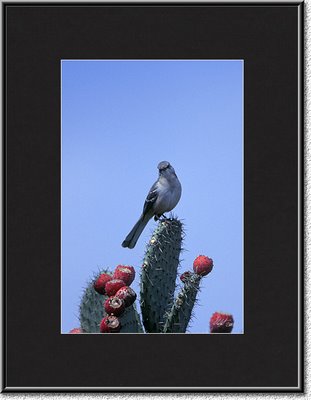
Here is a picture of the cenzontle bird that fascinates Sara, the one that sings the scale backward.
And here is the maguey cactus that she lines her path with:

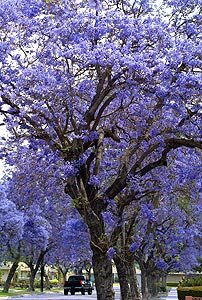
And the jacaranda she loves:

And here is the maguey cactus that she lines her path with:

And the jacaranda she loves:
Saturday, October 21, 2006
FAVORITE DESCRIPTION?
Did anyone have a favorite or especially telling description/passage from the book?
I thought it was touching and significant how the villagers' take on the Evertons, who resemble us more than the villagers, shed so much light on their quiet lifestyle:
"Lourdes says the senor and senora read their separate books, then stare out the window for ten minutes at a time."
And this was magnificent as a description of their home, or any home: "After the bishop left, they would return to their house, light their lamps, light their fire, and in this way reduce the world, spiritual and temporal, to a bright square space between four whitewashed walls."
The author is a master of domestic comfort. But I'd also like to hear her elaborate on this description from the chapter "The Baptists": "... a wanton girl, barefoot and merry, drifting on tides of perfumed air from sacrilege to sacrilege." (That's how I imagine the author as a young woman!)
I thought it was touching and significant how the villagers' take on the Evertons, who resemble us more than the villagers, shed so much light on their quiet lifestyle:
"Lourdes says the senor and senora read their separate books, then stare out the window for ten minutes at a time."
And this was magnificent as a description of their home, or any home: "After the bishop left, they would return to their house, light their lamps, light their fire, and in this way reduce the world, spiritual and temporal, to a bright square space between four whitewashed walls."
The author is a master of domestic comfort. But I'd also like to hear her elaborate on this description from the chapter "The Baptists": "... a wanton girl, barefoot and merry, drifting on tides of perfumed air from sacrilege to sacrilege." (That's how I imagine the author as a young woman!)
GREAT DESIGN
I mentioned before that Doerr's writing seemed more like painting to me than linear narrative — and not just because the big-picture is always informing the details, but because she's a great designer, because she uses careful details to inform the big picture. It's sort of how like Woody Allen's films are visually thought out to the very last detail, like how in "Alice" all the colors are autumnal and imperceptibly build a very certain mood. Or how in the film "Trafffic" all the scenes in Mexico are lit differently. You know you are in Mexico now just because of the light. Doerr's chapter "Christmas Messages" is a good example of this. She writes:
"It began like any other winter day, with the oyster light of dawn ..."
We learn at the end of the chapter that that day would be the first day of snow in 60 years. But she doesn't begin with that dramatic statement. She ends with it. She builds to it:
"..beyond numb December fields ... the eastern light, turned opal by now..." (the light falls on the Evertons' faces ... Doerr sees them like a painter would)
a man's shirt "drying on a cactus under the wan sun."
of winter: "they knew all its dusks and daybreaks"
"Sara believed that the landscape, by its own force, had arrested time."
"at least util a later day, which might dawn warmer, with a yellower sun, and enough light to cast the shadow of a tree."
"Since four o'clock a heavy gray ceiling has strung itself from hilltop to hilltop ..."
And they lay abed that day, while the clouds gathered and the village drama went on around them. Doerr's way of saying they made love is so exquisite: " The Evertons had gone back to bed after the visit of Luis ... The wool robe and pajamas were slipping inch by inch from the foot of the bed to the floor... One hour later they were still in bed, and when Luis returned to knock on the door a second time there was some delay before they answered."
And then the sky falls out and the snow that has been coming all day comes.
(Doerr is fantastic)
"It began like any other winter day, with the oyster light of dawn ..."
We learn at the end of the chapter that that day would be the first day of snow in 60 years. But she doesn't begin with that dramatic statement. She ends with it. She builds to it:
"..beyond numb December fields ... the eastern light, turned opal by now..." (the light falls on the Evertons' faces ... Doerr sees them like a painter would)
a man's shirt "drying on a cactus under the wan sun."
of winter: "they knew all its dusks and daybreaks"
"Sara believed that the landscape, by its own force, had arrested time."
"at least util a later day, which might dawn warmer, with a yellower sun, and enough light to cast the shadow of a tree."
"Since four o'clock a heavy gray ceiling has strung itself from hilltop to hilltop ..."
And they lay abed that day, while the clouds gathered and the village drama went on around them. Doerr's way of saying they made love is so exquisite: " The Evertons had gone back to bed after the visit of Luis ... The wool robe and pajamas were slipping inch by inch from the foot of the bed to the floor... One hour later they were still in bed, and when Luis returned to knock on the door a second time there was some delay before they answered."
And then the sky falls out and the snow that has been coming all day comes.
(Doerr is fantastic)
"Where youth grows pale, and specter-thin, and dies" — Keats, Ode to a Nightingale
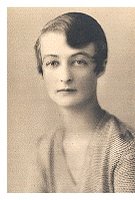 Did anyone else feel that Sara and Richard were sort of thinly drawn? I can't help but think this was intentional, to make them seem more wraithlike in their foreign home and in Richard's coming death. (I looked up "wraith" in my dictionary to make sure I was using it properly, and it said, "the exact likeness of a living person seen usually just before death as an apparition.") I think Sara even felt like a wraith at times — thus her admonition to "Bring stones," i.e., something to weigh down the existence that was here, to give it substance, permanence, memory. I think that's a beautiful effect, but sometimes I wanted more of these characters, to have a more material feel for them, to get inside their emotional shell. Do you think, though, that that would have destroyed the specter-thin atmosphere of the novel?
Friday, October 20, 2006
AN ENTHUSIASTIC ASIDE FOR CL
I am hooked on this book, cl. Thanks for introducing me to Ira Levin! (Have you read any Patricia Highsmith?)
Tuesday, October 17, 2006
"Stones for Ibarra" -- initial impressions
Lovely choice, Ben. The anti- "Ugly American."
Jumping from their journey to foreshadowing Richard's death was initially jarring, but I settled into the story.
The stories about the villagers -- Basilico Garcia, the doctor's suicide -- at times were more interesting than Sara and Richard's storyline.
For an anti-Christian tale ("better heretics than Baptists" -- hehe), the villagers blew past a number of the Ten Commandments. Was that intentional, or just the makeup of human behavior?
I want a green parrot that says, "Vamanos!"
And did anyone think this was odd in the chapter "Kid Munoz" (sorry, can't find tilda): Sara dances with a miner, and it follows: "This is how she met Basilico Garcia."
Did you expect further interaction between those two?
Hope I'm not rushing Ben or anyone else. I've got to post some questions before the story starts leaking out of my memory -- albeit this one's memorable.
Jumping from their journey to foreshadowing Richard's death was initially jarring, but I settled into the story.
The stories about the villagers -- Basilico Garcia, the doctor's suicide -- at times were more interesting than Sara and Richard's storyline.
For an anti-Christian tale ("better heretics than Baptists" -- hehe), the villagers blew past a number of the Ten Commandments. Was that intentional, or just the makeup of human behavior?
I want a green parrot that says, "Vamanos!"
And did anyone think this was odd in the chapter "Kid Munoz" (sorry, can't find tilda): Sara dances with a miner, and it follows: "This is how she met Basilico Garcia."
Did you expect further interaction between those two?
Hope I'm not rushing Ben or anyone else. I've got to post some questions before the story starts leaking out of my memory -- albeit this one's memorable.
Monday, October 16, 2006
November book pick
Hi, everybody. I have wavered on everything from another children's book to Agatha Christie, but am going to stick with my first idea: A Kiss before Dying, by Ira Levin.
The novel won an Edgar Award in 1954 for best first novel. The author also wrote The Boys from Brazil and, of course, The Stepford Wives.
I read it a long time ago and am looking forward to reading it again and having somebody to talk about it with. I would warn you now not to do any research on it because there would be so many spoilers to the story.
(Anyway, now I need to finish Ben's pick!)
The novel won an Edgar Award in 1954 for best first novel. The author also wrote The Boys from Brazil and, of course, The Stepford Wives.
I read it a long time ago and am looking forward to reading it again and having somebody to talk about it with. I would warn you now not to do any research on it because there would be so many spoilers to the story.
(Anyway, now I need to finish Ben's pick!)
Thursday, October 12, 2006
Progress report
The plan was to begin discussing Stones for Ibarra on October 15. How is everyone progressing? I'm behind, and will probably finish a little late. Should we set a new date, or are you all going to be done by the fifteenth?
Wednesday, September 27, 2006
SWEET, SWEET JANE
 I've been reading about JA's juvenilia. I really want to read this one (as described on Wikipedia):
Love and Freindship is a juvenile story by Jane Austen, dated 1790, when Austen was 14 years old. Written in epistolary form, like her later unpublished novella, Lady Susan, it is likely one of the tales she wrote for the amusement of her family. The installments, written as letters from the heroine Laura, to Marianne, the daughter of her friend, Isabel, "La Comtesse de Feullide," may have come about as nightly readings by the young Jane in the Austen home. Love and Freindship (the misspelling is one of many in the story) is clearly a parody of romantic novels Austen read as a child. This is clear even from the subtitle, "Deceived in Freindship and Betrayed in Love," which totally undercuts the title. In form, it resembles a fairy tale as much as anything else, featuring wild coincidences and turns of fortune, but Austen is determined to lampoon the conventions of romantic stories, right down to the utter failure of romantic fainting spells, which always turn out badly for the female characters. In this story we can see the development of Austen's sharp wit and distain for romantic sensibility, so characteristic of her later novels.
AUSTEN'S REALISM
I thought this passage at the end of the last chapter was really well done. It has a feel of Realism that seems way ahead of its time. What do you think?
Willoughby could not hear of her marriage without a pang; and his punishment was soon afterwards complete, in the voluntary forgiveness of Mrs. Smith, who, by stating his marriage with a woman of character as the source of her clemency, gave him reason for believing that had he behaved with honour towards Marianne he might at once have been happy and rich. That his repentance of misconduct, which thus brought its own punishment, was sincere, need not be doubted; nor that he long thought of Colonel Brandon with envy, and of Marianne with regret. But that he was for ever inconsolable, that he fled from society, or contracted an habitual gloom of temper, or died of a broken heart, must not be depended on- for he did neither. He lived to exert, and frequently to enjoy himself. His wife was not always out of humour, nor his home always uncomfortable; and in his breed of horses and dogs, and in sporting of every kind, he found no inconsiderable degree of domestic felicity.
For Marianne, however, in spite of his incivility in surviving her loss, he always retained that decided regard which interested him in every thing that befell her, and made her his secret standard of perfection in woman; and many a rising beauty would be slighted by him in after-days as bearing no comparison with Mrs. Brandon.
Willoughby could not hear of her marriage without a pang; and his punishment was soon afterwards complete, in the voluntary forgiveness of Mrs. Smith, who, by stating his marriage with a woman of character as the source of her clemency, gave him reason for believing that had he behaved with honour towards Marianne he might at once have been happy and rich. That his repentance of misconduct, which thus brought its own punishment, was sincere, need not be doubted; nor that he long thought of Colonel Brandon with envy, and of Marianne with regret. But that he was for ever inconsolable, that he fled from society, or contracted an habitual gloom of temper, or died of a broken heart, must not be depended on- for he did neither. He lived to exert, and frequently to enjoy himself. His wife was not always out of humour, nor his home always uncomfortable; and in his breed of horses and dogs, and in sporting of every kind, he found no inconsiderable degree of domestic felicity.
For Marianne, however, in spite of his incivility in surviving her loss, he always retained that decided regard which interested him in every thing that befell her, and made her his secret standard of perfection in woman; and many a rising beauty would be slighted by him in after-days as bearing no comparison with Mrs. Brandon.
Monday, September 25, 2006
MRS. JENNINGS AGAIN
What do you make of Mrs. Jennings and the role she plays in the narrative? The narrator is constantly making fun of her and pointing out her foibles, particularly her blindness to the true nature of Lucy Steele, and yet she is held up as a model of good-heartedness and sincerity. Of all the husbandless matriarchs in the book, she is the one — rather than Mrs. Dashwood herself and Mrs. Ferrars and even Willoughby's rich aunt — who seems like JA's model of maternal love to me. And JA endows her with a wacky kind of prescience that makes her correctly predict at the VERY beginning of the book — as soon as we meet her — that Marianne will marry Col. Brandon (In Chapter 8: "She was perfectly convinced of it."). At the end of the book, when Marianne is sick, Elinor comes to truly love Mrs. Jennings, which is the narrator's signal to the reader, in case the reader didn't get it before, that she really is a woman of note — and not just some caricature of a silly society matron.
I think JA's favoring of Mrs. Jennings, the girls' de facto mother through most of the book, is also a sign of her democratic impulse. Mrs. Jennings' husband made his fortune in trade, and that sets her apart from the landed gentry who have all lived idly and forever off the incomes of their estates. She lacks refinement, but she compensates with a generous heart and a liberal spirit.
I love how she is introduced: "Mrs. Jennings, Lady Middleton's mother, was a good-humoured, merry, fat, elderly woman, who talked a great deal, seemed very happy, and rather vulgar. She was full of jokes and laughter, and before dinner was over, had said many witty things on the subject of lovers and husbands."
Compare the introduction of Mrs. Ferrars: "Mrs. Ferrars was a little, thin woman, upright, even to formality, in her figure, and serious, even to sourness, in her aspect. Her complexion was sallow; and her features small, without beauty, and naturally without expression; but a lucky contraction of the brow had rescued her countenance from the disgrace of insipidity, by giving it the strong characters of pride and ill-nature. She was not a woman of many words; for, unlike people in general, she proportioned them to the number of her ideas."
I think JA's favoring of Mrs. Jennings, the girls' de facto mother through most of the book, is also a sign of her democratic impulse. Mrs. Jennings' husband made his fortune in trade, and that sets her apart from the landed gentry who have all lived idly and forever off the incomes of their estates. She lacks refinement, but she compensates with a generous heart and a liberal spirit.
I love how she is introduced: "Mrs. Jennings, Lady Middleton's mother, was a good-humoured, merry, fat, elderly woman, who talked a great deal, seemed very happy, and rather vulgar. She was full of jokes and laughter, and before dinner was over, had said many witty things on the subject of lovers and husbands."
Compare the introduction of Mrs. Ferrars: "Mrs. Ferrars was a little, thin woman, upright, even to formality, in her figure, and serious, even to sourness, in her aspect. Her complexion was sallow; and her features small, without beauty, and naturally without expression; but a lucky contraction of the brow had rescued her countenance from the disgrace of insipidity, by giving it the strong characters of pride and ill-nature. She was not a woman of many words; for, unlike people in general, she proportioned them to the number of her ideas."
Saturday, September 23, 2006
Geraldine Brooks
So if Ms. Brooks were to imagine a novel told from the point of view of one of the male characters, whose story would you be most interested to hear: Willoughby, Brandon or Edward?
Tuesday, September 19, 2006
NARRATIVE VOICE
What, if anything, did you think of the narrative voice? Did it seem antiquated? It seems to have poked fun at everyone from time to time, except maybe at Elinor.
One curious thing about it: Did anyone notice the sudden use of the first person by the narrator? In Chapter 36, about three pages in, there's this: "I come now to the relation of a misfortune which about this time befell Mrs. John Dashwood." Where did this "I" come from? I found it really jarring. I wonder whether it's in every edition. I have the Bantam Classic paperback reissue April 2006. It doesn't say what original text it's based on, if there's more than one.
One curious thing about it: Did anyone notice the sudden use of the first person by the narrator? In Chapter 36, about three pages in, there's this: "I come now to the relation of a misfortune which about this time befell Mrs. John Dashwood." Where did this "I" come from? I found it really jarring. I wonder whether it's in every edition. I have the Bantam Classic paperback reissue April 2006. It doesn't say what original text it's based on, if there's more than one.
MRS. JENNINGS AND MRS. FERRARS
These two struck me as the matriarchal pillars of the novel. In many ways, they were the most powerul people in the book — like Lady Catherine in Pride and Prejudice — and yet they were very different. JA's books seem to be peopled with anti-patriarchs, i.e., most of the men except for the main love interest seem to be sidelined and ineffectual, and it's really the women calling most of the shots. I found this very striking. I don't know whether anyone else noticed this ... or maybe it's what Christy was getting at with her "mean girls" comment ... especially in terms of when JA was writing, early 1800s, as compared with, say, the Bronte sisters' books, written in mid-1800s, which are very male-centered, even "Jane Eyre," good grief, is really about a man, as is "Wuthering Heights"..... although I can't help but see a very compelling resemblance between Cathy in "Wuthering Heights" and Marianne in S&S. (I guess Charlotte Bronte disliked JA — thought she was overrated, lacked cajones. I wonder what Emily thought...) Anyway, this is not a question, so much as a rambling, but if anyone has any thoughts on this, I'd like to hear them.
WILLOUGHBY AND MARIANNE
Did you see the revelation of Willoughby's real character coming? Did JA set him up as something too good to be true? Or were you totally surprised like Marianne? Was Marianne's abandon and lack of propriety with regard to him (in the eyes of the Age and of Elinor) something that was bound to be punished, in this case by losing him?
Monday, September 18, 2006
Potential spoiler
(Don't read if you aren't finished ....)
You'll have to have read more than one of Jane Austen's books to compare, but did you think she skimped a little on the ending in terms of intimacy, impassioned dialogue and all the perks of a romantic happy ending? Particularly with Marianne? I can't remember too well with P&P, but I think in "Emma" the author was more willing to stay with the characters as they admitted their love, committed to marriage, etc.
I felt a little cheated -- as a sentimental slob -- at how much narrative she uses to gloss over the ending at "Sense" after putting me through all that stress, damn it!
You'll have to have read more than one of Jane Austen's books to compare, but did you think she skimped a little on the ending in terms of intimacy, impassioned dialogue and all the perks of a romantic happy ending? Particularly with Marianne? I can't remember too well with P&P, but I think in "Emma" the author was more willing to stay with the characters as they admitted their love, committed to marriage, etc.
I felt a little cheated -- as a sentimental slob -- at how much narrative she uses to gloss over the ending at "Sense" after putting me through all that stress, damn it!
Saturday, September 16, 2006
Meow!
I don't know that "Mean Girls" quite stacks up to the underhanded scheming, passive-aggressive insults and blatant snobbery from the women of "Sense and Sensibility." I had trouble even finding a sympathetic adult female character besides Elinor and Marianne.
Any thoughts on what Miss Austen had to say about her sex? Would you credit any behavior to the limited and cutthroat role for women of the day -- marriage for their own (and family's) prosperity and reputation?
Any thoughts on what Miss Austen had to say about her sex? Would you credit any behavior to the limited and cutthroat role for women of the day -- marriage for their own (and family's) prosperity and reputation?
Friday, September 15, 2006
Thursday, September 14, 2006
Round two
My second pick, to be discussed starting around October 15, is Stones for Ibarra by Harriet Doerr.
Wednesday, September 06, 2006
More on schedule and pacing
As of yesterday, I hadn't started our next selection, and I was hoping to have it done by about September 15, when we're planning to start discussing it (as I understand our calendar). So I checked out a copy of Sense & Sensibility from the WSU library, noted that it has 335 pages and I had 11 days to read it in, so I gave myself the goal of reading about 30 pages a day. I'm just letting y'all know this in case you want to try a similar idea yourself.
Also, as I understand it, we're planning to do about one book per month, and to announce the selections early so people can procure the book and get a head start if necessary. With that in mind, I'll plan to name my selection around September 15, at the same time that we start discussing Sense and Sensibility. Then you'll have a month to procure it and read it, while we discuss Sense and Sensibility. We usually don't spend a whole month discussing (unless we're really dragging it out without a lot of comments), so even if you don't like to overlap books, it should work. We can discuss a book in the second half of the month and you can read a book in the first half. If you prefer to read slower and don't mind discussing one book while reading another, then you'll have a whole month to read each one. (We may have to change this schedule if it turns out to be too quick. Or we could change it temporarily if someone picks an especially long book.)
Let me know whether this sounds okay. Otherwise, I'll just plan to name my pick around September 15 and begin the discussion around October 15.
Also, as I understand it, we're planning to do about one book per month, and to announce the selections early so people can procure the book and get a head start if necessary. With that in mind, I'll plan to name my selection around September 15, at the same time that we start discussing Sense and Sensibility. Then you'll have a month to procure it and read it, while we discuss Sense and Sensibility. We usually don't spend a whole month discussing (unless we're really dragging it out without a lot of comments), so even if you don't like to overlap books, it should work. We can discuss a book in the second half of the month and you can read a book in the first half. If you prefer to read slower and don't mind discussing one book while reading another, then you'll have a whole month to read each one. (We may have to change this schedule if it turns out to be too quick. Or we could change it temporarily if someone picks an especially long book.)
Let me know whether this sounds okay. Otherwise, I'll just plan to name my pick around September 15 and begin the discussion around October 15.
Sunday, September 03, 2006
C is for Chuck and Creative, too
Though I've criticized some parts of the book, I still would give "Haunted" a high score for originality. There were some intriguing characters, too. I can't say that I ever could anticipate what would happen next (save for, after a while, the fact that characters would die). If 10's the best score you could give this novel sheerly for ingenuinity, what would you rate it?
Friday, September 01, 2006
Author's agenda
There was an aspect to this novel, which I think was well-written and interesting overall, that turned me off from working on it for a while. (This is no insult to the great G-Force, who chose it.) Part of it was how these stories followed each other so closely: One was Whittier's taking advantage of the suburban volunteer mom type, and the other was the journalist who'd commit murder for a Pulitzer. While I appreciate that Palahniuk works with absurdity, as both of those stories reflected (nobody would issue a Pulitzer for a celebrity profile), he still has this agenda he's working for his male, anti-Establishment type audience.
One, take the so-called "soccer moms," who are not as inane or mediocre as people relentlessly portray them. I think Salon has or had a category once called "Soccer Moms Who Think," and it really pissed me off. Starting with choosing to stay home with your kids doesn't mean you're an intellectual lightweight. Or that you would fall prey to the seductive charms of some dying man-kid.
Two, his portrayal of journalists equally offended. I understand these were supposed to be depraved characters, but the absurdity of setting up a man as a pornographer and murderer is obviously a jab at a profession that, within my limited viewpoint, is full of people with a great deal of conscience as a rule.
So yes, both stories develop the characters, but I think it's similar to "Fight Club." That first idea has made Palahniuk a literary legend -- you can still find Web sites of guys who think Fight Club is some kind of religion. So he comes up with other people to target, who are easy to hate, like moms and the media, that his fan base loves to believe are just the way he portrays them.
One, take the so-called "soccer moms," who are not as inane or mediocre as people relentlessly portray them. I think Salon has or had a category once called "Soccer Moms Who Think," and it really pissed me off. Starting with choosing to stay home with your kids doesn't mean you're an intellectual lightweight. Or that you would fall prey to the seductive charms of some dying man-kid.
Two, his portrayal of journalists equally offended. I understand these were supposed to be depraved characters, but the absurdity of setting up a man as a pornographer and murderer is obviously a jab at a profession that, within my limited viewpoint, is full of people with a great deal of conscience as a rule.
So yes, both stories develop the characters, but I think it's similar to "Fight Club." That first idea has made Palahniuk a literary legend -- you can still find Web sites of guys who think Fight Club is some kind of religion. So he comes up with other people to target, who are easy to hate, like moms and the media, that his fan base loves to believe are just the way he portrays them.
IS THIS CLUB DEAD?
I like this book club. I like reading books and discussing them with people. I'll be kind of sad if this club peters out right now, but if that is what is happening, maybe we should just be honest about it, huh?
Saturday, August 26, 2006
Hearing voices
Did Palahniuk succeed in creating different voices for his different writers, or did it seem as if all the stories were written by the same person? Did certain character traits revealed of the writers in the narrative or the poems come through to you in the stories they were supposed to have written?
A novel idea?
How much did you care about "Haunted" as a novel? Was it more interesting just as a collection of short stories than a full narrative? Did you particularly care about the characters in the writers retreat?
And in particular, what did you think about the poems that introduced the writer before each story? Would you rather have preferred the novel have a more traditional structure to tell the story?
And in particular, what did you think about the poems that introduced the writer before each story? Would you rather have preferred the novel have a more traditional structure to tell the story?
Best and worst
Of the stories contained in "Haunted," which did you like the best, and which the least, and why? Maybe also mention which you found particularly funny, insightful, gross and preposterous.
Saturday, August 19, 2006
KIM'S PICK
 My choice, because at least three out of five of us have never read it, and the other two did eons ago, is Jane Austen's "Sense and Sensibility." I think it would be a good companion piece to "Haunted." Or possibly not. We can discuss.
(My understanding is that we'll start discussing this in mid-September, but correct me if I'm wrong.)
Friday, August 18, 2006
Schedule suggestions
I wanted to propose some more formal guidelines so that we aren't lingering over one book for so long. I admit I am a bad slacker (not quite finished with Haunted, but can be done in a night), and I'd like to keep doing this because your suggestions have been so enjoyable. What about this, if we do a monthly format:
On the 15th of the month, the next moderator will announce their book choice for next month. Or, for KC, that would be soon. This gives us two weeks to start the book, if we need extra time, or to request it from the library, because I am so cheap.
Discussion could start around, say, the 10th or 15th of the actual month and remain active until the end of the month.
Or we could stretch this to a bimonthly format, but it's harder to get back into the discussion if we finish at such varying times, I think.
My other thought is that perhaps there would be a few months a year for a break ... I'm thinking mostly that G and B will be taking finals, and KC giving them, so maybe December and May should be off months. If we're still doing this by then, anyway.
What do you guys think? Is this too ambitious for all of our new kids in school?
On the 15th of the month, the next moderator will announce their book choice for next month. Or, for KC, that would be soon. This gives us two weeks to start the book, if we need extra time, or to request it from the library, because I am so cheap.
Discussion could start around, say, the 10th or 15th of the actual month and remain active until the end of the month.
Or we could stretch this to a bimonthly format, but it's harder to get back into the discussion if we finish at such varying times, I think.
My other thought is that perhaps there would be a few months a year for a break ... I'm thinking mostly that G and B will be taking finals, and KC giving them, so maybe December and May should be off months. If we're still doing this by then, anyway.
What do you guys think? Is this too ambitious for all of our new kids in school?
Wednesday, August 16, 2006
FELLOW READERS!
When are we going to start discussing this book? I am in love with the baglady story.
Saturday, July 22, 2006
BETTER YET, ANSWER THIS IF YOU DARE
OK, I made it through the notorious first vignette in "Haunted." I trust you all are champing at the bit to share your own stories about the yuckiest thing that ever happened to you while masturbating. Or not.
Seriously, though, are there kids who devote huge amounts of time and energy looking for weird ways to do it?
Seriously, though, are there kids who devote huge amounts of time and energy looking for weird ways to do it?
Monday, July 10, 2006
ANSWER THIS, IF YOU DARE
I've alluded to this issue already, but I seriously want to know what you guys think,  because this topic really intrigues me, even though it's really just futile speculation and could lead to arguments — nay, plate throwing — about sexism. Nevertheless. Can you tell that the author of this book is a woman? Would it occur to you that it was, if you didn't know? Be honest. I won't get mad, probably.
 because this topic really intrigues me, even though it's really just futile speculation and could lead to arguments — nay, plate throwing — about sexism. Nevertheless. Can you tell that the author of this book is a woman? Would it occur to you that it was, if you didn't know? Be honest. I won't get mad, probably.
George's pick: "Haunted" by Chuck Palahniuk

This is actually my second choice; I didn't want my first selection to be a Chuck Palahniuk book, but what I was planning on using others have read. Sorry.
And I don't think we're finished with "March." But I wanted to put this out there to give time for people to get a copy (in case they were using their local library).
Wednesday, July 05, 2006
Hero?
How effective a hero does everyone see March? His principles led him to enlisting, but it seems they also hindered him, namely instances of inaction such as at the Bluff or not taking the pistol. He was able to do some good, teaching freed men to read and write. But it seems he didn't do much for the abolitionist cause by coming down south like he expected. He didn't change any minds, he didn't free any slaves. Did his efforts justify overlooking his duties to his family?
Subscribe to:
Posts (Atom)
